Credit Chronicle: Q2 2026
Our credit experts review how credit markets fared in the second quarter of the year and share the latest scorecards for the global credit universe.

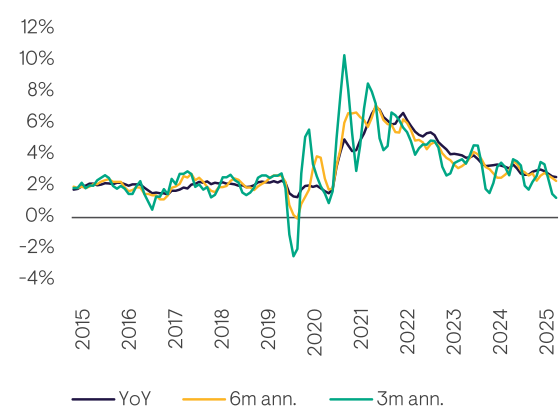
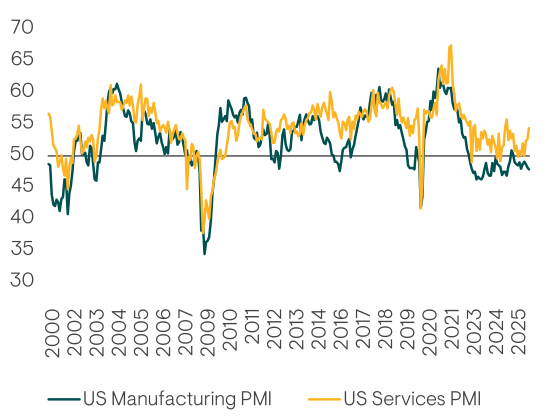
The US economy has weathered the tariff storm over the last eight months better than many investors had expected, with economic data remaining buoyant and inflation pressures benign. This has been supported by strong disinflationary forces from the housing sector, which continue to underpin progress. As we look ahead to 2026, growth is expected to remain robust and broaden, supported by the lagged impact of monetary easing, improving liquidity conditions as the Federal Reserve (Fed) returns to balance sheet expansion, and front-loaded fiscal spending that continues to support consumer spending. There are early signs of this broadening evident within the credit cycle, where momentum is no longer confined to previously dominant areas such as private credit, but is spreading more widely. Delayed tariff pass-through and broader disinflationary forces are expected to contain inflation more than consensus anticipates, keeping the door open to further easing from the Fed. However, as we move into the second half of the year, upside risks may increase as demand recovers and base effects become less supportive. Against this backdrop, we expect US risk assets to remain supported, with scope for a broadening in performance drivers as liquidity conditions ease. The labour market, however, remains a key risk to monitor.
Figure 1: US core CPI
Source: Ninety One, December 2025.
Figure 2: US PMI
Source: Ninety One, December 2025.
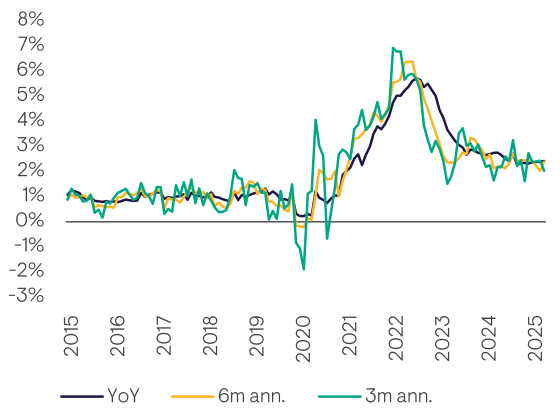
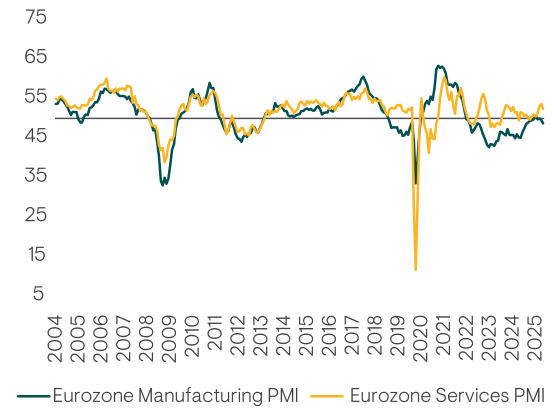
In Europe, monetary policy has been eased, with policy rates now at neutral levels. This is supporting an emerging economic recovery and a new credit cycle. The headwinds from recent tariff announcements are expected to weigh on growth in the coming quarters, albeit to a lesser extent than previously feared, while the latest budget proposals in Germany and across Europe to increase defence spending are expected to provide ongoing support to growth. A lagging policy reaction function from the ECB in the coming quarters raises the prospects of a reflationary environment as we move into 2026, creating a potential supportive backdrop for European currencies and risk assets, absent a renewed escalation in tariffs.
Figure 3: Euro core CPI
Source: Ninety One, December 2025.
Figure 4: Euro PMI
Source: Ninety One, December 2025.
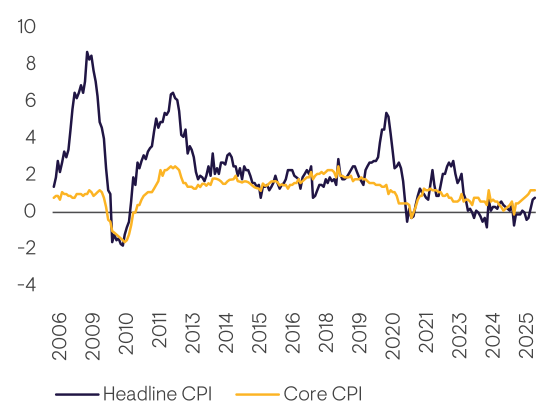
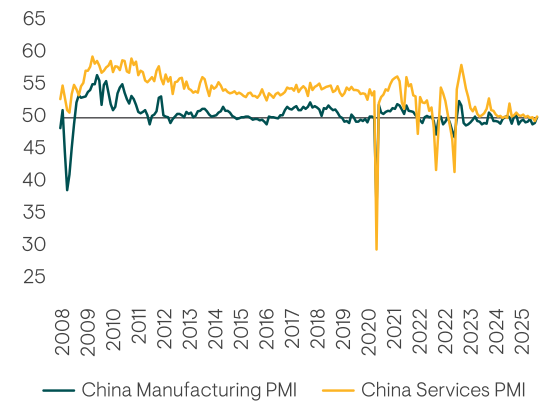
In China, easing measures have become less forceful in the near term, with the credit impulse once again rolling over. While the authorities continue to prioritise domestic consumption as a driver of growth, the “special action plan” outlines a broad set of measures aimed at shifting the growth model away from high-value-added industry and exports towards domestic consumption, a transition accelerated by the escalation in trade conflict. However, their ability to materially ease policy is constrained by weak domestic confidence and elevated debt levels.
The introduction of “anti-involution” policies has renewed hopes for an end to deflation and a recovery in nominal earnings. While we continue to expect policymakers to take the necessary steps to support a sustained recovery in consumption, near-term domestic risk assets have repriced significantly, and renewed weakness in the property sector adds to the headwinds facing consumption, suggesting limited asymmetry.
Figure 5: China inflation
Source: Ninety One, December 2025.
Figure 6: China PMI
Source: Ninety One, December 2025.
As a result of our central investment roadmap, as discussed above, we continue to believe that risk assets will remain supported by easing fiscal and monetary conditions. Prospective liquidity easing by key central banks further supports this view, while improving credit cycles suggest the potential for a broadening of market drivers. In fixed income, we maintain a healthy allocation to defensive government bonds, given potential downside risks and a lack of value in credit markets. This provides dry powder to deploy during episodes of market volatility. In currency markets, while we continue to believe the medium-term path for the US dollar is weaker, stronger near-term economic momentum and upside inflation risks could lead to short-term upside for the currency.
General risks. The value of investments, and any income generated from them, can fall as well as rise. Where charges are taken from capital, this may constrain future growth. Past performance is not a reliable indicator of future results. If any currency differs from the investor’s home currency, returns may increase or decrease as a result of currency fluctuations. Investment objectives and performance targets are subject to change and may not necessarily be achieved, losses may be made. Environmental, social or governance related risk events or factors, if they occur, could cause a negative impact on the value of investments.
Specific risks. Currency exchange: Changes in the relative values of different currencies may adversely affect the value of investments and any related income. Emerging market (inc. China): These markets carry a higher risk of financial loss than more developed markets as they may have less developed legal, political, economic or other systems. Commodity related investment: Commodity prices can be extremely volatile and significant losses may be made. Default: There is a risk that the issuers of fixed income investments (e.g. bonds) may not be able to meet interest payments nor repay the money they have borrowed. The worse the credit quality of the issuer, the greater the risk of default and therefore investment loss. Equity investment: The value of equities (e.g. shares) and equity-related investments may vary according to company profits and future prospects as well as more general market factors. In the event of a company default (e.g. insolvency), the owners of their equity rank last in terms of any financial payment from that company.
