Credit Chronicle: Q2 2026
Our credit experts review how credit markets fared in the second quarter of the year and share the latest scorecards for the global credit universe.

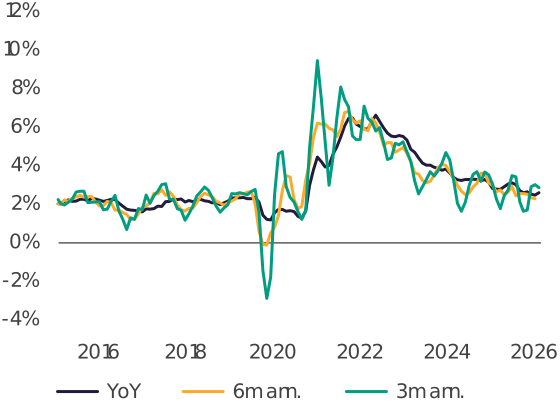
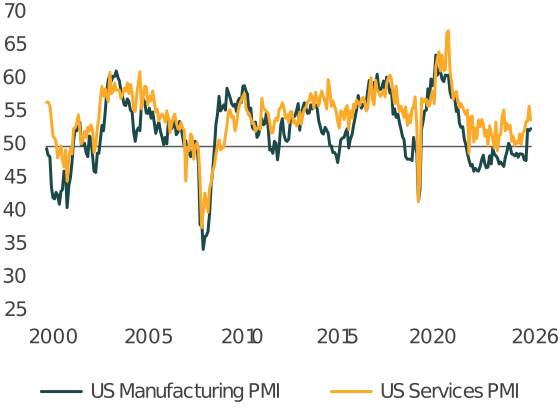
The US economy continues to demonstrate resilience, with economic data remaining buoyant and showing increasing signs of broadening. There are already initial signs of this broadening within the credit cycle, where momentum is no longer confined to areas that previously dominated, such as private credit.
As we continue through 2026, growth is expected to remain robust and broaden, supported by the lagged impact of monetary easing, improving liquidity conditions as the Federal Reserve returns to balance sheet expansion and front-loaded fiscal spending that supports consumers. Disinflationary forces in shelter and other key components are likely to be offset by inflationary pressures arising from challenging base effects and an improving demand backdrop, with further upside risks from energy and commodity prices as the implications of the Iran war continue to weigh on global supply chains. As a result of these dynamics, we expect US risk assets to remain supported, with the potential for a broadening of performance drivers as liquidity conditions ease and demand recovers. The labour market, however, remains a key risk to monitor.
Figure 1: US core CPI
Source: Ninety One, March 2026.
Figure 2: US PMI
Source: Ninety One, March 2026.
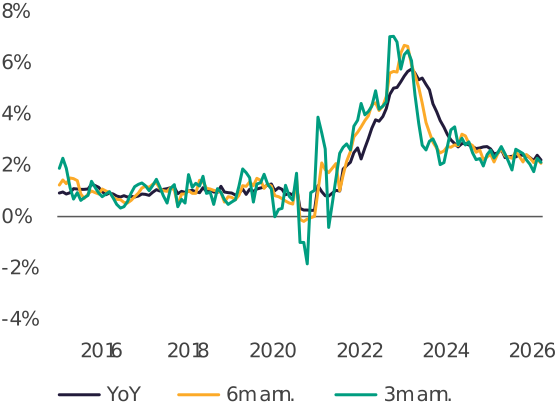
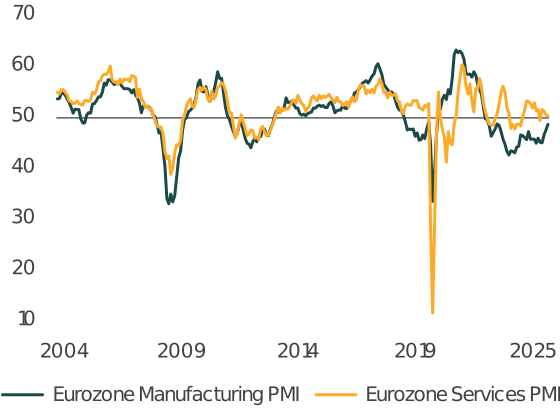
In Europe, there is evidence of an emerging economic recovery supported by previous policy easing, a new credit cycle and expanding fiscal budgets in Germany and across Europe. However, the strength of this recovery remains uncertain, with headwinds from the reflexivity of recent euro strength, higher interest rates, rising energy prices and uncertainty over the timing of fiscal support. The latest Iran war is likely to have a more significant impact on the European economy, given its reliance on imported energy, and poses key upside risks to inflation. The European Central Bank has shifted to a more proactive stance, becoming more sensitive to inflation surprises and increasing the probability of rate hikes and a potential policy mistake. The higher level of uncertainty over the European growth outlook suggests more caution is warranted for European currencies, in our view, particularly given recent outperformance.
Figure 3: Euro core CPI
Source: Ninety One, March 2026.
Figure 4: Euro PMI
Source: Ninety One, March 2026.
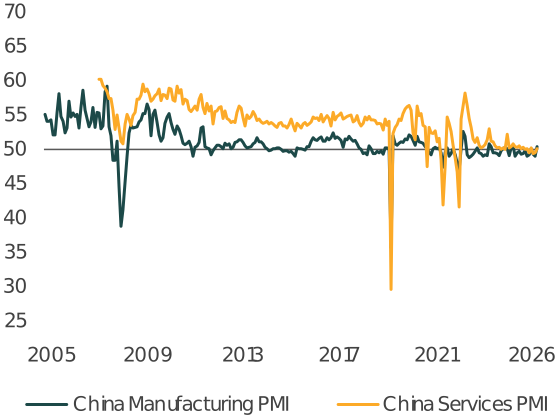
In China, easing measures have softened in the near term, with the credit impulse once more rolling over. The Chinese authorities continue to prioritise domestic consumption as a driver of growth. In particular, the “Special Action Plan” outlines a broad set of measures that will be implemented to support a transition away from the recent drivers of growth, namely high-value-added industry and exports, towards domestic consumption. The move was driven by the escalation in trade conflict, but China’s ability to materially ease is constrained by weak domestic confidence and elevated debt levels.
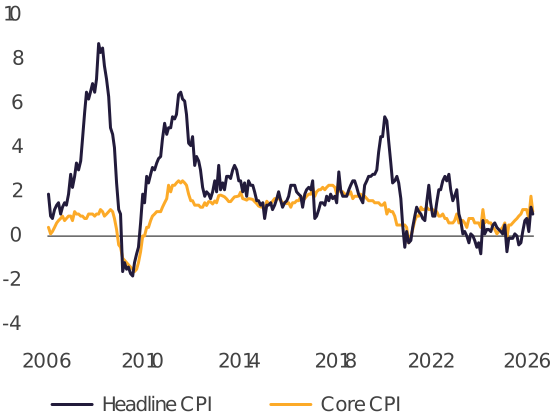
Recent growth data show some signs of a recovery in economic momentum from a weak base, with consumer confidence improving and the property market potentially nearing a bottom. The introduction of “anti-involution” policies and supportive base effects have supported a recovery in inflation, which has key implications for the rest of the world given the degree to which China has been an exporter of deflation over the last few years.
Figure 5: China inflation
Source: Ninety One, March 2026.
Figure 6: China PMI
Source: Ninety One, March 2026.
As a result of our central investment roadmap, as discussed above, we continue to believe that risk assets will remain supported by easing fiscal and monetary conditions. Improving credit cycles and accelerating economic momentum suggest the potential for a broadening in market drivers, although geopolitical tensions are likely to continue to add to volatility.
We prefer areas of the market that will benefit from reflationary conditions, such as small caps and basic resources. In fixed income, valuations have notably reset in defensive government bonds in the near term, reflecting elevated inflation risks. As a result, the longer end of curves continues to offer attractive diversifying qualities, in our view.
In currency, while we continue to believe the medium-term path for the US dollar is weaker, the recovering economic backdrop and inflation risks create near-term upside risks to the currency, at a time when European peers are facing headwinds from the latest geopolitical events.
General risks. All investments carry the risk of capital loss. The value of investments, and any income generated from them, can fall as well as rise and will be affected by changes in interest rates, currency fluctuations, general market conditions and other political, social and economic developments, as well as by specific matters relating to the assets in which the investment strategy invests. If any currency differs from the investor’s home currency, returns may increase or decrease as a result of currency fluctuations. Past performance is not a reliable indicator of future results. Environmental, social or governance related risk events or factors, if they occur, could cause a negative impact on the value of investments.
Specific risks. Currency exchange: Changes in the relative values of different currencies may adversely affect the value of investments and any related income. Emerging market: These markets carry a higher risk of financial loss than more developed markets as they may have less developed legal, political, economic or other systems. Commodity related investment: Commodity prices can be extremely volatile and significant losses may be made. Default: There is a risk that the issuers of fixed income investments (e.g. bonds) may not be able to meet interest payments nor repay the money they have borrowed. The worse the credit quality of the issuer, the greater the risk of default and therefore investment loss. Equity investment: The value of equities (e.g. shares) and equity-related investments may vary according to company profits and future prospects as well as more general market factors. In the event of a company default (e.g. insolvency), the owners of their equity rank last in terms of any financial payment from that company.
