Credit Chronicle: Q2 2026
Our credit experts review how credit markets fared in the second quarter of the year and share the latest scorecards for the global credit universe.
24 Oct 2025
5 minutes

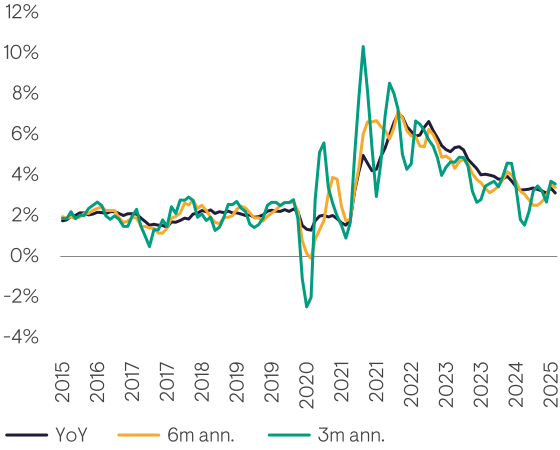
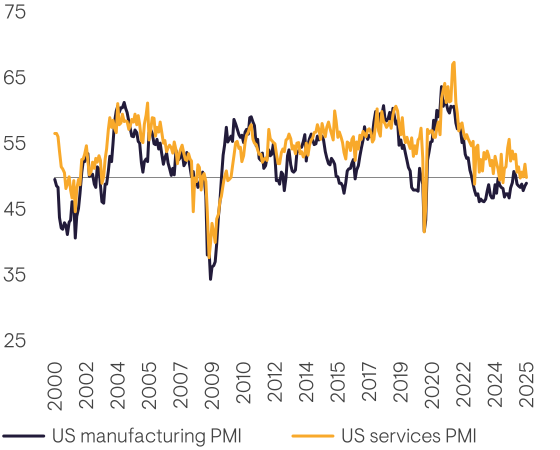
The tariff picture continues to evolve, with persistent uncertainty and the ongoing impact of higher trade costs keeping the risk of a stagflationary scenario in the US relatively elevated. Despite these headwinds, US economic data remains buoyant and inflation pressure benign with strong disinflationary forces from housing continuing to support progress. The latest tax bill, deregulation and a return to easing and a risk management approach by the Federal Reserve is likely to provide further support for economic growth as we move through the rest of the year and into 2026. Recession risks remain elevated, however, with the full impact of the Trump administration’s policies (tariffs, immigration, DOGE etc.) still unclear and the labour market in balance. As a result of these dynamics, we expect some ongoing volatility in the price of US risk assets in the near-term, with upside risks as liquidity conditions are eased.
Figure 1: US core CPI
Source: Ninety One, September 2025
Figure 2: US PMI
Source: Ninety One, September 2025
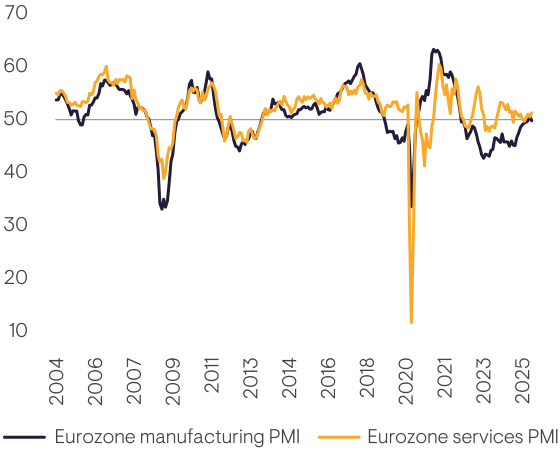
In Europe, monetary policy has been eased with policy rates now at neutral levels. This is supporting an emerging economic recovery and a new credit cycle. The headwinds from the recent tariff announcements are expected to impact growth in the coming quarters, albeit less so than previously feared, while the latest budget proposals in Germany and across Europe to increase defence spending are expected to provide ongoing support to economic growth. A lagging policy reaction function from the ECB in the coming quarters increases the prospects for a reflationary environment in the region later this year, creating the potential for an ongoing supportive environment for European currencies and risk assets, outside of the tariff reescalation scenario.
Figure 3: Euro core CPI

Source: Ninety One, September 2025
Figure 4: Euro PMI
Source: Ninety One, September 2025
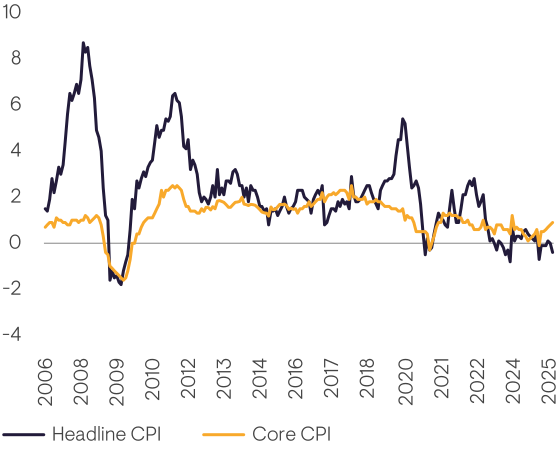
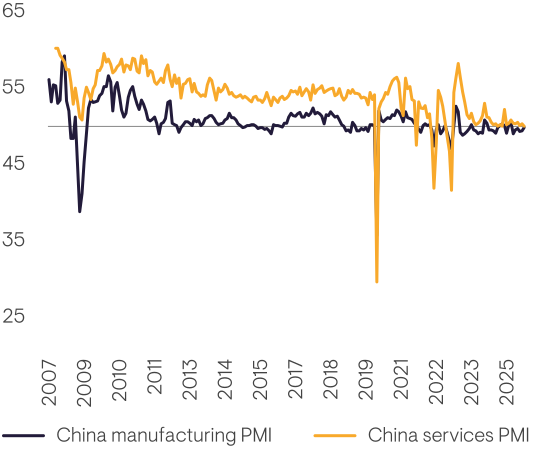
In China, easing measures are becoming progressively more forceful, with a pivot in policy toward prioritising domestic consumption as a driver of growth. Chinese authorities have released a ‘special action plan’ outlining a broad set of measures that will be implemented in seeking to transition away from the recent driver of growth, being high-value-added industry and exports, towards domestic consumption, driven by the step up in trade conflict. The introduction of ‘anti-involution’ policies has renewed hopes of an end to deflation and a recovery in nominal earnings.
While we continue to expect policymakers to take the necessary steps to ensure a sustained recovery in consumption, in the near-term, domestic risk assets have repriced considerably and a renewed weakening in the property sector adds headwinds to consumption suggesting limited asymmetry.
Figure 5: China inflation
Source: Ninety One, September 2025
Figure 6: China PMI
Source: Ninety One, September 2025
As a result of our central investment roadmap, as discussed above, we continue to believe that risk assets will remain supported by easing fiscal and monetary conditions, albeit with volatility given elevated risks to US growth. The potential easing in liquidity conditions by key central banks adds to support for risk assets, particularly as uncertainty wanes. In fixed income, a healthy exposure to defensive government bonds remains, given potential downside risks and a lack of value in credit markets. This provides us with dry powder to capitalise on any episodes of volatility in financial markets. In the currency market, we continue to monitor the US dollar for opportunities to add to short positions, given the potential economic divergence between the US and the rest of the world.
Policy tides turn
The tariff picture continues to evolve, with persistent uncertainty and the ongoing impact of higher trade costs keeping the risk of a stagflationary scenario in the US relatively elevated. Despite these headwinds, US economic data remains buoyant and inflation pressure benign with strong disinflationary forces from housing continuing to support progress. The latest tax bill, deregulation and a return to easing and a risk management approach by the Federal Reserve is likely to provide further support for economic growth as we move through the rest of the year and into 2026. Recession risks remain elevated, however, with the full impact of the Trump administration’s policies (tariffs, immigration, DOGE etc.) still unclear and the labour market in balance. As a result of these dynamics, we expect some ongoing volatility in the price of US risk assets in the near-term, with upside risks as liquidity conditions are eased.
Figure 1: US core CPI
Source: Ninety One, September 2025
Figure 2: US PMI
Source: Ninety One, September 2025
In Europe, monetary policy has been eased with policy rates now at neutral levels. This is supporting an emerging economic recovery and a new credit cycle. The headwinds from the recent tariff announcements are expected to impact growth in the coming quarters, albeit less so than previously feared, while the latest budget proposals in Germany and across Europe to increase defence spending are expected to provide ongoing support to economic growth. A lagging policy reaction function from the ECB in the coming quarters increases the prospects for a reflationary environment in the region later this year, creating the potential for an ongoing supportive environment for European currencies and risk assets, outside of the tariff reescalation scenario.
Figure 3: Euro core CPI
Source: Ninety One, September 2025
Figure 4: Euro PMI
Source: Ninety One, September 2025
In China, easing measures are becoming progressively more forceful, with a pivot in policy toward prioritising domestic consumption as a driver of growth. Chinese authorities have released a ‘special action plan’ outlining a broad set of measures that will be implemented in seeking to transition away from the recent driver of growth, being high-value-added industry and exports, towards domestic consumption, driven by the step up in trade conflict. The introduction of ‘anti-involution’ policies has renewed hopes of an end to deflation and a recovery in nominal earnings.
While we continue to expect policymakers to take the necessary steps to ensure a sustained recovery in consumption, in the near-term, domestic risk assets have repriced considerably and a renewed weakening in the property sector adds headwinds to consumption suggesting limited asymmetry.
Figure 5: China inflation
Source: Ninety One, September 2025
Figure 6: China PMI
Source: Ninety One, September 2025
As a result of our central investment roadmap, as discussed above, we continue to believe that risk assets will remain supported by easing fiscal and monetary conditions, albeit with volatility given elevated risks to US growth. The potential easing in liquidity conditions by key central banks adds to support for risk assets, particularly as uncertainty wanes. In fixed income, a healthy exposure to defensive government bonds remains, given potential downside risks and a lack of value in credit markets. This provides us with dry powder to capitalise on any episodes of volatility in financial markets. In the currency market, we continue to monitor the US dollar for opportunities to add to short positions, given the potential economic divergence between the US and the rest of the world.
There are attractive investment opportunities across the entire investment universe. The key is knowing where to look across the credit markets, FX, equities and commodities.
The disinflationary forces across the US and Europe have supported central banks in easing policy back towards a more neutral level. In Europe, the ECB appears to be nearing the end of its cutting cycle, with economic data reaccelerating, supported by fiscal expansion and interest rate-sensitive areas of the economy.
The Federal Reserve has resumed lowering interest rates as uncertainty wanes and inflationary pressures remain benign; however, uncertainty over the growth and inflation outlook, particularly given tariff policies, may limit its ability to materially lower rates further. As a result of the uncertainty around the growth and inflation outlook across key regions, we have moved neutral on overall duration with remaining positions focused on areas where there is a high degree of economic sensitivity to interest rates such as the UK.
| View as at | 30 Sep 25 | 30 Jun 25 | 31 Mar 25 |
|---|---|---|---|
| US | |||
| Eurozone | |||
| Japan | |||
| UK | |||
| China |
| max positive | positive | neutral | negative | max negative |
Positive: UK, EU & Swedish curve steepeners, Short EU 2s
Developed market credit spreads remain at all-time highs/multiyear tights amid supportive macroeconomic and tariff policy backdrop. Given the limited upside, we don’t believe these valuation levels compensate investors for taking credit risks here, particularly in the US where recession risks remain elevated.
Overall, we are neutral on emerging market fixed income given the uncertainty in the global macroeconomic outlook. While certain areas have succeeded in controlling inflation through early and effective policy responses, tariff risks and potential downside global growth risks are not fully compensated for in current risk premia levels.
| View as at | 30 Sep 25 | 30 Jun 25 | 31 Mar 25 |
|---|---|---|---|
| EM HC | |||
| EM LC | |||
| US Credit | |||
| EU Credit |
| max positive | positive | neutral | negative | max negative |
We continue to see the medium-term outlook for the USD as biased to weakness, reflecting easier policy conditions and slowing economic activity as fiscal and immigration-related measures feed through to the real economy. The public sector’s outsized role in supporting growth in recent years has left the US more exposed as that impulse fades.
In contrast, early signs of recovery in Europe, underpinned by substantial policy easing, point to potential economic divergence between the US and the RoW. However, in the near term, positioning in short USD trades has become stretched. Combined with the reflexivity of the dollar and ongoing fiscal spending, there is a risk that US growth could surprise to the upside. As a result, we have moved to a neutral stance on the USD.
| View as at | 30 Sep 25 | 30 Jun 25 | 31 Mar 25 |
|---|---|---|---|
| USD | |||
| EUR | |||
| JPY | |||
| CNY | |||
| EM |
| max positive | positive | neutral | negative | max negative |
Positive: Euro, Brazilian real
Negative: Swiss franc, British pound
Within equities, we have become more constructive on the US outlook as the Federal Reserve continues to recalibrate policy toward a more neutral stance, aiming to prevent further downside risks to the labour market. This supportive policy backdrop, coupled with improving growth momentum, should continue to underpin US risk assets.
European markets are also poised to benefit from a cyclical recovery, reinforced by rising fiscal spending, which creates potential for further upside.
In emerging markets, Chinese authorities are actively easing policy to stabilise growth and confidence. While this should support related equity markets, we have moved to a neutral stance on the region in the near term following the recent repricing and more balanced valuation outlook.
| View as at | 30 Sep 25 | 30 Jun 25 | 31 Mar 25 |
|---|---|---|---|
| US | |||
| Europe ex-UK | |||
| UK | |||
| Japan | |||
| Asia ex-Japan | |||
| EM vs. DM |
| max positive | positive | neutral | negative | max negative |
Positive: Eurostoxx 50, Nasdaq call options
We continue to find attractive opportunities in natural resources, underpinned by structural demand tailwinds (e.g. electrification), tight supply and appealing valuations. Macro trends such as a weaker US dollar and rising fiscal deficits further support the sector, reinforcing its role as an inflation hedge. While geopolitical tensions in the form of tariffs and the Middle East conflict have dominated headlines, they have not derailed the long-term investment case.
In energy, near-term oversupply concerns continue to persist; near-term oversupply concerns continue to persist leading to a downgrade in score; however, we can see potential for a more positive oil outlook to materialise as we move into 2026, with US shale production plateauing and OPEC+ spare capacity returning to normal levels. We remain positive on copper amid strong demand from China and Europe, tariff-related stockpiling in the US and unplanned supply disruptions. The market looks fundamentally tight, and any price weakness may be short-lived.
Gold remains well-supported, buoyed by safe-haven demand, central bank buying and a weakening dollar. Platinum has also rallied on supply deficits, regulatory shifts, and rising jewellery demand. In agriculture, mixed fundamentals persist; grain oversupply tempers optimism, but input markets, such as fertiliser and protein, remain firm, justifying selective overweight positions.
| View as at | 30 Sep 25 | 30 Jun 25 | 31 Mar 25 |
|---|---|---|---|
| Energy | |||
| Precious metals | |||
| Base metals & bulks | |||
| Agriculture |
| max positive | positive | neutral | negative | max negative |
The Value team explains how it hunts for mispricings in moments of rising uncertainty in markets.
Developed-market bond yields have risen together, but for very different reasons. The contrast between the UK and US shows why investors need to look beneath the headline move.
Our EM Debt team shares its latest outlook and positioning across the investment universe.
EM equity gains in 2026 have been narrow, concentrated in AI-driven information technology. Archie Hart and Varun Laijawalla explain why this memory upcycle looks structurally different to previous ones, with recent earnings from the key players supporting a fundamentals story. They believe the theme is early, rather than exhausted.
Growth momentum is building across the Chinese economy, not solely in technology-linked sectors. We see opportunities for investors to align with the country’s ongoing structural transformation.
AI is driving new demand for commodities, while supply remains disciplined – supporting the outlook for natural resources equities.
August was a strong month for risk assets, with equities extending their advance as gold surged on renewed fiscal and inflation concerns. Resilient earnings, highlighted by another blowout Nvidia report, drove US and European equities to fresh records, while sharp moves in bond yields kept fixed income markets volatile. Gold jumped 10% as investors sought protection against inflation and financial repression, while emerging markets extended their gains on the back of the AI trade.
It has been another strong year for EM equities, which has left many investors pondering where exactly we are in this cycle. Archie Hart and Varun Laijawalla explain why there is scope to capture a re-rating that they believe has considerable upside from here.
The AI theme in credit markets is evolving rapidly. New financing packages can provide better compensation for risk but they require careful diligence.
The headwinds facing EM debt today are cyclical and manageable, with mispricing and divergence across countries creating a fertile hunting ground for active investors. Crucially, the strength of structural tailwinds behind the asset class is undiminished.
Our EM Debt team shares its latest outlook and positioning across the investment universe.
Overlapping pressures across agriculture, fertiliser and energy markets could create fresh inflationary risks this year, with wide ranging implications for commodity markets, monetary policy and emerging market assets.
Global markets split sharply in July, as a reassessment of AI valuations collided with a renewed oil shock. Doubts over AI capex and monetisation weighed heavily on technology and semiconductor stocks, while the collapse of the US-Iran agreement drove oil prices sharply higher, lifting energy, defence, and value-oriented markets. The result was one of the sharpest rotations in market leadership so far this year.
Ninety One's multi-asset growth team provides insights into the macroeconomic environment that informs our investment outlook for the coming quarter. This includes concise summaries of our asset class views.
For years, capital has gravitated to the US. A one-way trade powered by tech dominance and economic heft. But as the world tilts on its axis, the next cycle is unlikely to resemble the last, and the investment map is beginning to redraw itself.
A shrinking supply of shares has flattered US equity returns for years. The AI issuance boom is putting that into reverse.
Our credit experts review how credit markets fared in the second quarter of the year and share the latest scorecards for the global credit universe.
Recent election results point to a political pivot with positive implications for debt markets. Dynamics in this key region are reflective of broader shifts across the maturing EM debt market.
Our EM Debt team shares its latest outlook and positioning across the investment universe.
Markets are pricing in a rapid normalisation of Middle East oil supply following the US-Iran conflict. The talk at a resources industry conference highlights that risks remain.

Market and portfolio insights, webinars & events curated from across our investment teams to help you steer through changing investment landscapes.
Important Information
This communication is provided for general information only should not be construed as advice.
All the information in is believed to be reliable but may be inaccurate or incomplete. The views are those of the contributor at the time of publication and do not necessary reflect those of Ninety One.
Any opinions stated are honestly held but are not guaranteed and should not be relied upon.
All rights reserved. Issued by Ninety One.