The third lever
Monetary, fiscal, migration. How the US recession was averted, 2022-2023.
7 Jan 2025
20 minutes
With the world’s two major economies both gaining traction, global monetary conditions loosening and energy prices remaining weak, a broader and increasingly synchronised global recovery can be anticipated – absent unanticipated shocks.
We expect a continuation of the key trends of last year, when equity markets climbed the proverbial ‘wall of worry’ emanating from concerns about the impact on growth of high interest rates. The US economy, boosted by extremely loose fiscal policy, defied bearish expectations and posted strong growth in real terms. In China, on the other hand, growth disappointed. Although the final figure is likely to meet the official target of 5%, confidence among consumers and entrepreneurs remained stubbornly negative, the result of a continuing property bust. For a second year, Chinese growth was heavily dependent on government-directed capital investment and booming exports. Internationally, despite pervasive ‘higher for longer’ concerns in the first half of the year, inflation finally receded, giving central banks room to reduce official interest rates.
In 2025, the US is likely to again deliver above-trend growth. Although government debt is uncomfortably high at c.126% of GDP and fiscal spending ultimately unsustainable at 6.4% of GDP, consumer and corporate balance sheets are in good shape. Consumer spending has not been ‘juiced’ with debt and low interest rates, which has often been the case in the past; it has relied on income growth and is thus more sustainable. This, and a better export performance, have compensated for a weaker manufacturing sector. Companies have responded to labour shortages by raising capital investment and productivity has rebounded strongly from the low levels in the period following the Global Financial Crisis (GFC). Again, supply-driven growth tends to be qualitatively better and more sustainable. Although higher inflation can be expected over the medium to long term, it should continue receding this year. It is too early to say what impact, positive or negative, the new Trump administration’s policies will have. But we do know that it will be a government of businesspeople, rather than career politicians, who are likely to be pro-business and pro-growth.
In China, the policy actions announced last September reflect how seriously President Xi is taking bolstering growth. Anecdotal evidence suggests that consumer and business sentiment is finally turning a corner. Meanwhile, China’s ‘new economy’ sectors, such as electric vehicles and renewable energy infrastructure, have continued to expand rapidly, demonstrating that the country is succeeding in rising up the value chain. But this has been obscured by a property sector bust and associated deleveraging in what was hitherto one of China’s largest contributors to growth. Particularly impressive has been China’s emergence as an automation superpower. We anticipate a steady improvement in China’s economy in 2025 as local authority financing is unblocked and sentiment improves further.
US will grow above trend; China has turned a corner
With the world’s two major economies both gaining traction, global monetary conditions loosening and energy prices remaining weak, a broader and increasingly synchronised global recovery can be anticipated – absent unanticipated shocks.
We expect a continuation of the key trends of last year, when equity markets climbed the proverbial ‘wall of worry’ emanating from concerns about the impact on growth of high interest rates. The US economy, boosted by extremely loose fiscal policy, defied bearish expectations and posted strong growth in real terms. In China, on the other hand, growth disappointed. Although the final figure is likely to meet the official target of 5%, confidence among consumers and entrepreneurs remained stubbornly negative, the result of a continuing property bust. For a second year, Chinese growth was heavily dependent on government-directed capital investment and booming exports. Internationally, despite pervasive ‘higher for longer’ concerns in the first half of the year, inflation finally receded, giving central banks room to reduce official interest rates.
In 2025, the US is likely to again deliver above-trend growth. Although government debt is uncomfortably high at c.126% of GDP and fiscal spending ultimately unsustainable at 6.4% of GDP, consumer and corporate balance sheets are in good shape. Consumer spending has not been ‘juiced’ with debt and low interest rates, which has often been the case in the past; it has relied on income growth and is thus more sustainable. This, and a better export performance, have compensated for a weaker manufacturing sector. Companies have responded to labour shortages by raising capital investment and productivity has rebounded strongly from the low levels in the period following the Global Financial Crisis (GFC). Again, supply-driven growth tends to be qualitatively better and more sustainable. Although higher inflation can be expected over the medium to long term, it should continue receding this year. It is too early to say what impact, positive or negative, the new Trump administration’s policies will have. But we do know that it will be a government of businesspeople, rather than career politicians, who are likely to be pro-business and pro-growth.
In China, the policy actions announced last September reflect how seriously President Xi is taking bolstering growth. Anecdotal evidence suggests that consumer and business sentiment is finally turning a corner. Meanwhile, China’s ‘new economy’ sectors, such as electric vehicles and renewable energy infrastructure, have continued to expand rapidly, demonstrating that the country is succeeding in rising up the value chain. But this has been obscured by a property sector bust and associated deleveraging in what was hitherto one of China’s largest contributors to growth. Particularly impressive has been China’s emergence as an automation superpower. We anticipate a steady improvement in China’s economy in 2025 as local authority financing is unblocked and sentiment improves further.
Expect synchronised rate reductions and steeper yield curves
Policy rates remained elevated and continued to exert downward pressure on both growth and inflation in 2024. Despite periods when it seemed to be ‘stickier’, inflation fell significantly throughout the year. And while economic growth remained surprisingly stable, labour markets continued to loosen, reflecting increased supply rather than layoffs. With the risks now evidently more finely balanced, these dynamics are encouraging central banks to cut rates in a synchronised manner and return to a neutral policy stance to support growth.
US yields remain near cyclical peaks, reflecting uncertainty about the depth of future rate cuts and the long-term neutral rate – both of which are critical in determining how far long-term bond yields can fall. The Federal Reserve Board anticipates a neutral rate of 3%, vs. the market expectation that the neutral rate has moved up to c.3.7%. Consequently, there is a danger that policy becomes too stimulative. Fiscal policy could play a significant role under the new US administration: a loose fiscal stance may boost nominal growth but also raise term premiums if deficits continue to expand. Trade policy remains ambiguous, with uncertain impacts on growth and inflation, which are dependent on the size of any tariffs and whether there is retaliation. This should become clearer following Trump’s inauguration. Overall, yield curves are likely to steepen, with little scope for longer maturity bonds to sustain rallies outside of a materially weaker growth environment.
In contrast to the Federal Reserve Board, the European Central Bank’s neutral policy rate projection of 2-3% is probably too high, given the region’s material structural growth challenges, such as industrial weaknesses in Germany and limited fiscal flexibility in Italy and France, which could lead to persistently weak growth and inflation. Furthermore, Europe’s reliance on global trade makes it particularly vulnerable to rising protectionism. These vulnerabilities could become painfully apparent in the first half of 2025, eventually prompting more aggressive rate cuts to below 2%, which in turn should result in a strong performance from European bonds.
Differences between current inflation and the inflation target
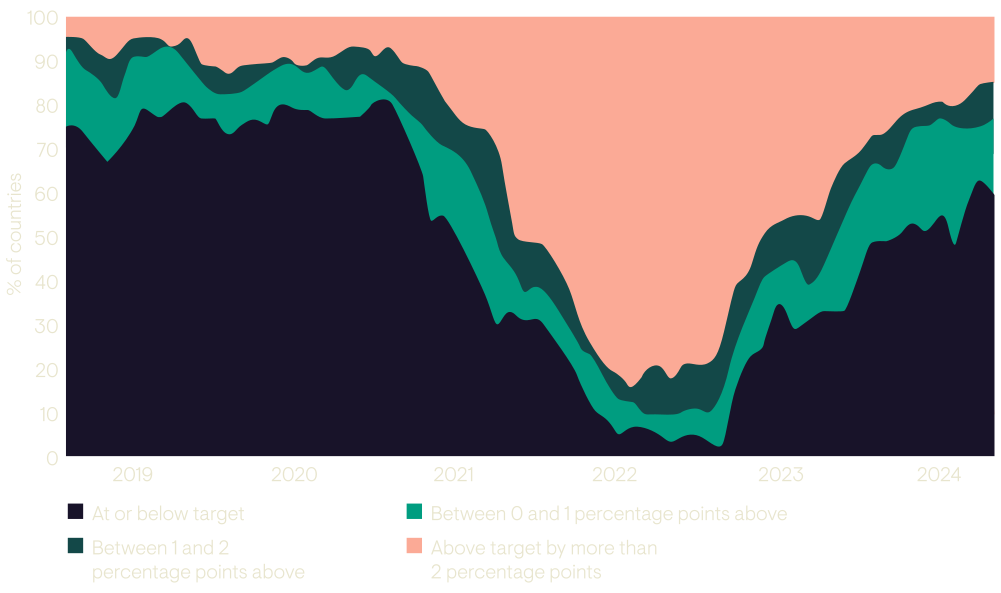
Source: IMF, 2024.
The economic effects of lower rates are likely to be felt more strongly in the second half of 2025, limiting the extent of rate cuts and bond rallies. Early indicators – such as money supply growth which is bottoming, stabilising credit growth and improvements in rate-sensitive sectors such as housing – all suggest that many economies are already responding to rate cuts and expectations of further easing.
Opportunities in specialised segments and Europe; some credit markets look expensive
Credit markets are navigating a tug-of-war between attractive all-in yields and unquestionably tight spreads. So far, the yield component has been the clear winner, as evidenced by sustained inflows into the asset class, despite investment-grade and high-yield spreads sitting at multi-decade lows. Strong credit fundamentals have supported these markets, but unprecedented demand has been the primary driver of spread compression this year.
Given the constrained valuations in traditional US investment-grade and high-yield debt, we see greater opportunities in specialised segments of the credit market. Structured credit remains attractively priced relative to corporates, particularly collateralised loan obligation (CLO) mezzanine tranches. Similarly, agency mortgage-backed securities (MBS) offer compelling relative value compared to both investment-grade corporates and segments of high yield. Agency MBS spreads are among the few credit asset classes still near historical wides, driven by a weak technical backdrop and elevated rate uncertainty – factors we expect to normalise this year. Additionally, we favour leveraged loans over high yield, given their higher carry, even accounting for potential further rate cuts.
Specialist asset classes offering more value
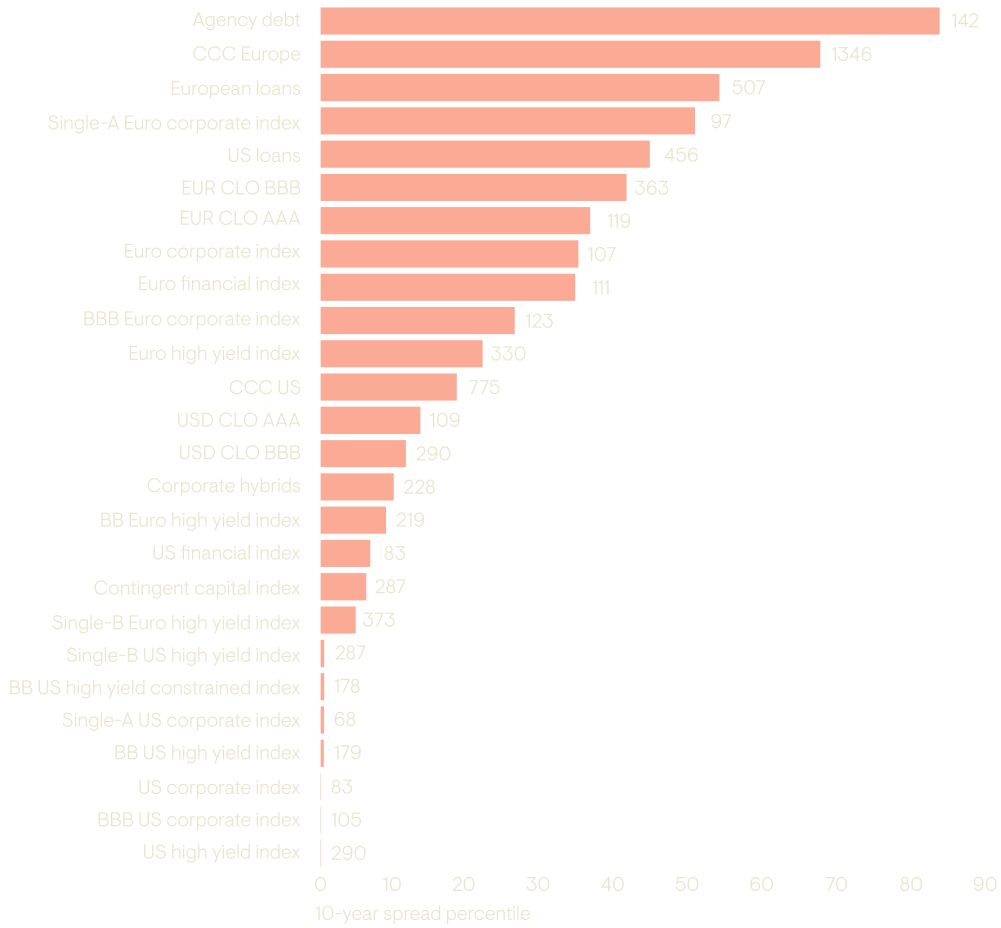
Source: Ninety One, Citi, JP Morgan, ICE. As of 17 October 2024. Labels denote the credit spread in basis points.
Regionally, we see more compelling bottom-up opportunities in Europe, where spreads across various asset classes remain significantly wider than their US counterparts. However, our focus is on defensive sectors, given the region's weaker growth outlook and limited upside in cyclicals. The banking sector has been a standout performer, and we expect it to continue outperforming in 2025, albeit at a more measured pace.
With credit spreads historically tight, a disciplined focus on single-name selection and dynamic positioning will be critical to navigate the challenges and opportunities ahead.
Headwinds, but EM fixed income could outperform expectations
Emerging markets fixed income (EMFI) has shown remarkable resilience despite notable headwinds. Since the rate-hiking cycle began in 2022, emerging economies have outperformed expectations, with their central banks tightening rates more than their developed market counterparts and achieving similar inflation. Countries like Brazil, Peru and India have grown strongly, partly due to Chinese commodity demand.
Now, though, the situation is more complex. The market expects Trump's policies to lead to marginally higher US growth and inflation, leaving the US Federal Reserve (Fed) with less room to ease which, along with the effects of tariffs, should support a stronger US dollar. This could be a headwind for emerging markets (EM) assets, but significant pessimism is already priced in – note, for instance, the weak performance of Asian foreign exchange since the US election.
The biggest risk for EMFI is tariffs, due to their potential impact on trade-dependent EM economies. However, we are cautious about assuming EMs will do worse than the already-gloomy market expectations. In any case, a selective investment approach might mitigate this risk. Higher tariffs may increase inflation in the US, potentially leading to a higher Federal Funds Rate and consequent impacts on EMs, but the Fed might overlook a one-time inflationary surge. The Trump administration was elected as part of a rejection of inflation by the electorate and will be mindful of the need to honour that. A well-behaved US yield curve, driven by strong growth without major fiscal stimulus, would be more positive for EM assets.
Among other factors that could influence the macro outcomes for emerging markets, growth in China could exceed expectations if the Chinese authorities implement more fiscal easing. Additionally, resolutions to the conflicts in the Middle East and Ukraine/Russia, coupled with excess oil supply, could lead to lower oil prices, supporting consumer spending and reigniting a ‘goldilocks’ economic environment of low inflation and strong growth.
Within the EM complex, countries with high services-to-goods export ratios and high exports to the rest of the world relative to the US, such as India and Turkey, are likely to benefit. Conversely, countries like the Czech Republic may suffer if the European auto industry is targeted by tariffs. Overall, while there are challenges ahead, EMFI has the potential to remain resilient in the face of external pressures.
Within EM hard currency debt (sovereigns and corporates), spreads have continued to tighten over 2024 but are not nearly as expensive as many other dollar-based spread assets. Outright yields still remain attractive and, given we are largely through the post-COVID/Russian invasion-induced default cycle, we think hard-currency debt can deliver decent returns even with limited spread tightening. EM unhedged local currency may face some challenges from a stronger dollar, but EMs are still running high real policy rates, meaning they have room to ease. Furthermore, low oil prices have left aggregate EM terms-of-trade at very elevated levels. This should offer a strong buffer against any US dollar strength.
In South African assets specifically, markets are paying close attention to the new coalition that was brokered in June 2024. A national unity government, the first in 30 years, was agreed to take the leadership of government through the next four years in South Africa. This happened after support for the ruling African National Congress (ANC) fell under 50%. Renewed cooperation and indeed competition is expected to be positive for delivery. One policy markets will be paying attention to is Operation Vulindlela, an initiative to deliver on infrastructure delivery and growth which needs leadership agreements and capital expenditure by private and public partnerships.
Expectations will now shift to tangible results. We think growth expectations may still be challenged, and we see the achievement of two years of 2% GDP growth being delayed but not denied. Nevertheless, South Africa will have to navigate headwinds due to a stronger dollar and upside risks to US Treasury yields.
Assuming the US 10 year bond yield is 4 - 4.3%, an inflation differential between South Africa (SA) and the US of 2.5%, and an SA sovereign risk premium of ~3.5% (the average risk premium between 2011 – 2019 was 2.6%), there is a view that the SA 10 year bond yield can trade close to or below 10.3%, which could provide a total return of c.11% for SA bonds by December 2025.
EM vulnerability to trade wars
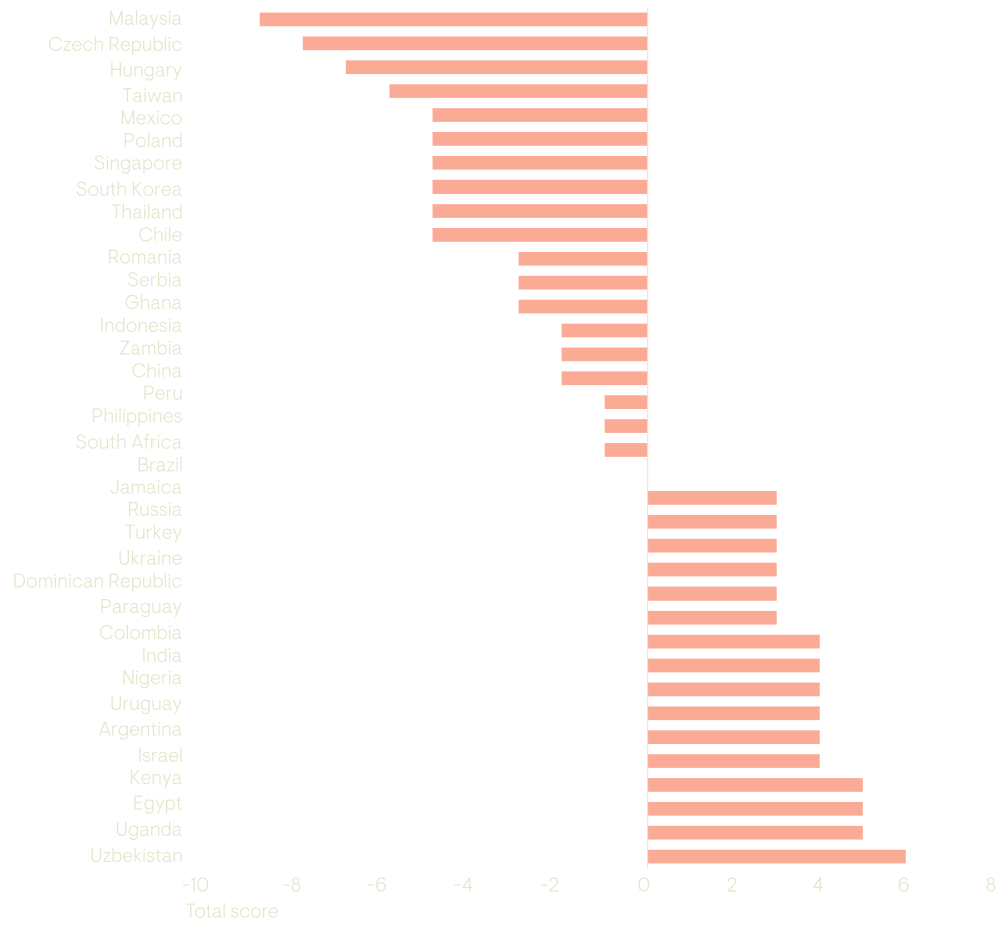
Source: Ninety One: EM vulnerability to trade wars (negative numbers indicate more vulnerable). This is a composite index made up of core exports to the US, trade openness (exports and imports/GDP), the current account balance and GVC participation, all scored qualitatively by our economist).
Look beyond 2024 winners in a more challenging year for US large-cap stocks
US exceptionalism was again the dominant theme in 2024, with US stock-market returns significantly exceeding those of most other markets and the US dollar posting gains for the year vs. other major currencies. At year-end, investor sentiment and equity allocations were both at cycle highs, and price earnings multiples were c.25x based on historic earnings and 22x based on forward earnings. But it is a top-heavy market: the 10 largest companies by market capitalisation amount to over 35% of the total market, a level of concentration not seen since the 1970s. And from a regional perspective, the US equity market now represents 75% of the MSCI World Index and 67% of the MSCI World All Countries Index.
The outperformance of the US, and US mega-cap tech stocks in particular, has been driven primarily by fundamentals, with the Magnificent 71 delivering compound revenue growth of a remarkable 16% per annum over the last 10 years and the average company in the MSCI USA Index seeing revenues rise by a still very respectable 6% per annum. By contrast, the average company in the MSCI AC World Index has delivered 0% revenue growth in US dollar terms over this period. However, the question is whether the concentration in portfolios even loosely based on market weights can be justified looking forward.
Equity returns have been concentrated in large cap, US and tech
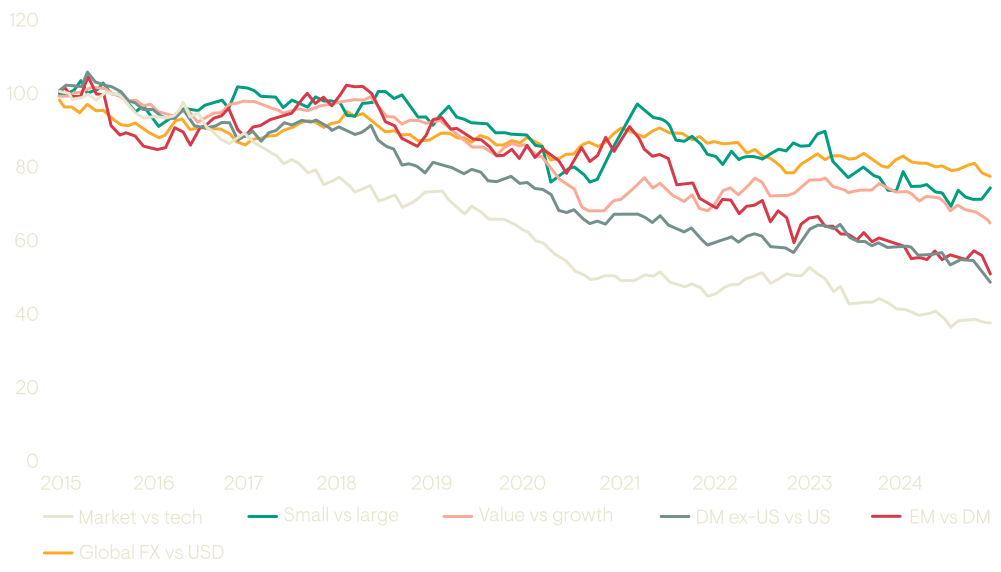
Source: Ninety One, Bloomberg, 2024.
While the macro prospects for the US economy look encouraging, much of the good news is probably already in equity prices, which implies that 2025 could be a more challenging year for US large-cap equities than the consensus currently believes. As we set out above, absent a crisis, we expect global conditions to improve over this year, which should lead to more competition with the returns generated by the dominant US businesses and interrupt the momentum that has been so supportive of that group. This could apply both to other less-favoured areas within the US equity market as well as international markets, which have languished in terms of relative performance.
On a more strategic investment horizon, it would certainly seem prudent to lean against the concentration in both large-capitalisation growth stocks and the US market, in order to sustain an adequate level of diversification in equity portfolios, rather than let exposure to both drift even higher. Also, US equities in aggregate now score poorly in many estimates of long-term equity returns, both in an absolute and relative sense, and investors are anticipating a continuation of historically exceptional outperformance of earnings growth well into the future. This begs the question of where the most attractive sources of diversified returns might be.
The cyclical outlook is unevenly priced across sectors. While prices in much of the technology and industrials sectors incorporate a bright outlook , concerns about consumer spending power and changing preferences have weighed on consumer discretionary and consumer staples. The financial sector offers an attractive combination of momentum and valuations, which remain reasonable on a historic basis. While US financials are well understood to be beneficiaries of deregulation and buoyant capital markets, European financials are generating attractive levels of shareholder return and have upside in a scenario where policy loosening and very defensive consumer and corporate balance sheets lead to a moderate re-leveraging cycle.
From a factor perspective, a tilt towards value and smaller companies would offer clear diversification vs. the growth and large-cap drivers that have dominated returns in recent years, and provide exposure to a broadening out of earnings growth across the market. Valuation spreads are particularly wide in Europe, where investor caution about the cyclical outlook also appears to be responsible for higher risk premia at the cheapest end of the market. Small caps are at historically wide valuation discounts in the US, Europe and the UK. A similar exposure can be achieved without venturing all the way down the market-cap spectrum, with a size discount evident each rung down from the very largest index constituents.
Finally, sentiment has been particularly negative for companies representing the decarbonisation theme. Trump’s election has intensified this, providing an interesting opportunity to invest in high-quality companies with strong structural-growth potential, such as battery manufacturers and innovative suppliers addressing the power needs of artificial intelligence (AI) and superscale data centres. Portfolios of such companies tend to have strong diversifying properties in the context of broader equity portfolios.
Mixed macro backdrop, but an abundance of bottom-up opportunities
A conventional forecaster, without any knowledge of recent US political events, could be quite optimistic about the outlook for EM equities, for three main reasons. First, the direction of US interest rates is clearly down, which is good news for most risk-on asset classes, and particularly higher beta classes such as EM equities. Second, consensus forecasts are that the US economy – the primary locomotive of global growth – will continue to expand. In fact, a combination of falling US interest rates and robust US economic growth is normally a very positive tailwind for EM equities. Third, EM equities are very attractively valued: they are cheap vs. history and vs. developed market equities in general and US equities in particular.
However, it is clear that Trump’s victory in the US elections remains a significant wildcard. Economically, the centrepiece of Trump’s policies and negotiation strategy is tariffs, particularly against China, Mexico and Canada.
A mitigating factor for China is that it has rapidly been diversifying its export markets. The US share of China’s exports has fallen from 20% in 2012 to just 13% in 2023. Thus, while higher US tariffs will be negative for China, they are unlikely to be an existential problem. Meanwhile, China’s recent border treaty with India and Xi Jinping’s recent visit to Brazil can be viewed through the prism of China’s long-standing policy to diversify export markets from the US.
Mexico is indeed reliant on the US for 85% of its exports. But there is a reasonable possibility, given their shared interests, that both sides could benefit from an expansion of existing trade, the United States-Mexico-Canada Agreement (USMCA), increased control over the US/Mexico border, and a crackdown on fentanyl labs and drug cartels.
However, ultimately the most substantive policies for China, India and Mexico will not be made in Washington DC, but in Beijing, Delhi and Mexico City. The same applies to other emerging markets. In the latter half of 2024, China signalled a much more urgent effort to underpin its economy, and stabilise the property market and local government finances. Meanwhile, Chinese corporates are valued cheaply, and management and owners are adapting to a tougher environment by improving operations and returning more capital to shareholders (through dividends and buy-backs). Thus, the weak top-down story is accompanied by a very strong bottom-up stock-picking opportunity.
One way of describing the rest of Asia is as the ‘AI factory to the world’. The US large-language models are essentially run on semiconductors, servers, datacentres, networks and switches predominantly manufactured in Asia. Investors can therefore buy the AI revolution in Asia at a fraction of the multiples on which it trades in the US. Much of Asia ex-China also benefits from a steady trend of supply-chain restructuring, from China to the ASEAN nations in particular.
Meanwhile, markets in India and the Middle East are richly valued, but deservedly so in our view given the transformational change evident. Female participation in the Saudi Arabian workforce has increased from 20% to nearly 35% in just the last five years. In India, the issue of 500 million new ‘Aadhar’ ID cards2 over the past 10 years has turbo-charged the growth in the economy through economic inclusion.
In other words, there remains an abundance of compelling bottom-up stock-picking opportunities in emerging markets, although there are also some weaker stories like Brazil or Mexico, where poor regulatory, economic and fiscal policies remain headwinds.
Within South Africa (SA) specifically, given growth headwinds from a stronger dollar and upside risk to US Treasury yields, we think interest rates can continue to fall. As a result, we see scope for the SARB to lower interest rates by another 50-75bps in 2025. History suggests that banks, insurers and retail should outperform in a scenario of lower inflation, lower interest rates and the ‘two-pot benefits’ policy (the dual use of retirement benefits). In the medium term we think SA equities can benefit from improving SA real GDP growth, which can recover to >2.0% in the medium term.
Commodity markets set to benefit from a broader cyclical upswing
Brent crude peaked above US$100 per barrel in response to Russia’s 2022 invasion of Ukraine, but oil prices have progressively receded since then. Markets have remained well supplied and prices would have fallen further but for OPEC’s production controls. Natural gas prices followed a similar but more extreme path.
The lagged impact of weaker energy prices should be supportive of the recovery theme, with risks to prices remaining to the downside. We forecast Brent remaining around US$70/bbl through the year ahead. The new Trump administration has been well telegraphed as being energy friendly, with improved supply seen as a means of supporting low inflation growth. Indeed, a relaxation of US planning regulations and removal of the pause on new liquefied natural gas (LNG) approvals likely set the scene for a boom in the US midstream production sector. There has been plenty of M&A in US energy over the last couple of years, and this is likely to continue under a more energy-friendly Trump White House.
US energy M&A activity
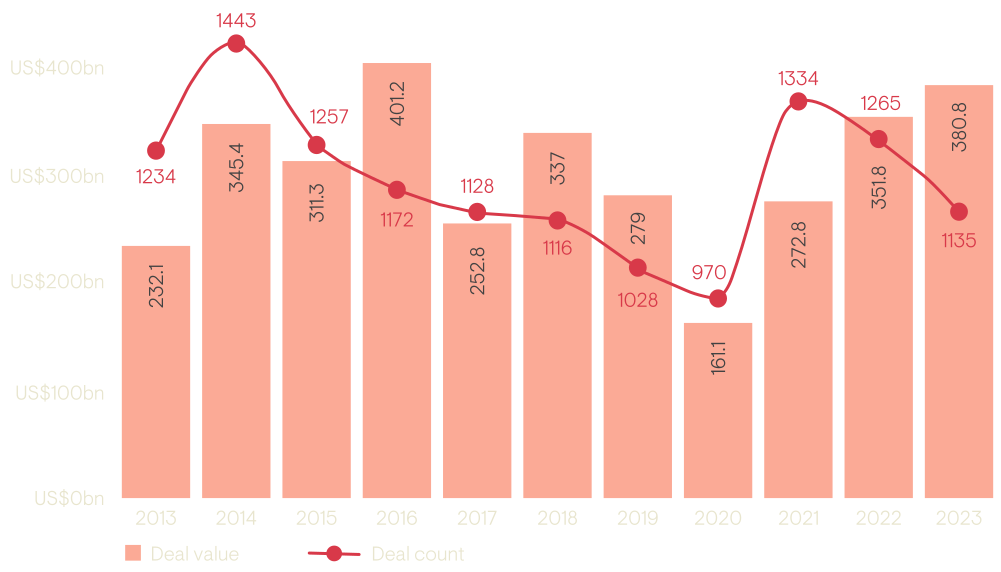
Source: Pitchbook. January 2024. 2023 data includes only disclosed deals.
Industrial metals prices peaked in late spring 2022, before correcting sharply over the rest of that year. Since then, prices in aggregate have gone broadly sideways despite weak demand, which suggests that supply is tight. This provides an encouraging backdrop for the mining sector, which should benefit from a global recovery we see as being supported by strengthening capital investment.
Physical gold was one of the star performers of 2024. This continued the trend sparked by the European Union’s confiscation of Russian reserves held in euros in response to the invasion of Ukraine, which triggered a major increase in central-bank buying. Together with investors seeking to hedge geopolitical uncertainties and risks associated with fiscal excesses, this has underpinned gold’s bull cycle. This year, we expect gold to remain in a long-term bull cycle and be well supported. But a period of consolidation is the most likely outcome. This could be good for gold-mining stocks, which have lagged the performance of the metal itself because of cost pressures and central banks’ preference for physical gold. With weaker energy prices, particularly for diesel, reducing costs and gold trading sideways, strong cashflows are likely to attract investor attention.
US dollar strength to fade over the year
Expectations of a new phase of US dollar weakness coming into 2024 were frustrated. The currency’s modest appreciation from April turned into more pronounced strength from October, after it became apparent that growth in the US was proving to be more resilient than many were anticipating. This contrasted starkly with weaker economic data from both Europe and China. The Bank of Japan has been notably cautious about raising rates despite evidence of persistent inflationary pressures. Trump’s victory added an additional support to this trend, with the prospects of tariffs being raised as early as the first half of this year.
Looking ahead, the spectrum of outcomes in currency markets is wider than we have seen for some time, despite the US dollar’s expensive starting point and the general consensus long positioning. On balance, we expect the US exceptionalism theme to dominate in the first half of the year, underpinning the US dollar. That said, one of the stated objectives of the new Trump administration is to engineer a weaker US currency to improve US competitiveness, so this might feature as part of the bilateral negotiations with some of the US’ key trading partners, echoing the Plaza Accord of 1985. Notwithstanding this possibility, in the second half of the year markets may well be looking forward to a more general global recovery, raising the prospect of improving returns on assets denominated in other currencies.
Geopolitics, or rather geo-economics, has become critical again
Investors should be very cognisant of the potential impact of the new Cold War between America and China on macro-economic conditions and markets. The rise of China and its reintegration into the world economy have finally overwhelmed the existing ‘rules-based order’ in a way that the rise of other North Asian countries such as South Korea and Japan did not.
What we are witnessing could be termed a ‘crisis of global integration’. Using historian Professor Charles Maier’s terminology, past political crises with international dimensions were: the crisis of representation in the 1910s, the crisis of capitalism in the 1930s, and the crisis of industrial society in the 1970s. The common feature was that existing political systems struggled to come up with solutions to economic and societal problems. The current crisis is about what will replace the former Washington consensus-defined global trading system as the world becomes rapidly more multi-polar and overtly politically diverse. The wars in Ukraine and the Middle East are manifestations of what for the most part is likely to take the form of a geo-economic struggle and unconventional warfare between the US and China and their proxies.
The outcome has been referred to by some as ‘de-globalisation’, resulting in a stagnation of global trade as economies of scale recede and capital flows less freely across borders. We think that such pessimism is likely to prove misplaced, believing that strategic competition is actually a spur to capital investment and that trade can flourish in a multipolar trading system. True, the reconfiguration of global supply chains increases costs and likely contributes to a higher rate of inflation as the price of greater strategic resilience. But it would surely be wrong to underestimate the adaptiveness of the global economy.
In 2013, former US Treasury secretary Larry Summers famously declared that the world’s advanced economies were in a state of secular stagnation, a period of sluggish growth, low interest rates and an absence of inflation. Today, central banks find themselves worrying about the opposite: the need to keep interest rates higher for longer. If these worries remain in the coming years, a key reason will be that the world is in the foothills of a global capital-expenditure (capex) supercycle.
Since 1945, there have been six significant capex cycles in the US, defined as periods when capex growth exceeded GDP growth, with the longest stretching across two cycles from the mid-1960s to the late 1970s. Since then, US capex growth has spent as much time below trend-GDP growth as above it, as the offshoring of production to Asia led to an investment boom there, especially after China’s 2001 accession to the World Trade Organisation. The post-GFC period invited balance-sheet consolidation in the US private sector and was not conducive to strong investment growth.
Now, a new capex cycle is emerging, underpinned by a multitude of structural drivers including: the shift towards net zero, efforts to enhance supply-chain resilience underpinned by persistent national security concerns, demographics, fast-rising defence spending, and public infrastructure spending across the developed and developing world. These transformative thematic macro trends could drive an 8-13% increase in annual global gross fixed capital formation by 2030, from the current US$25 trillion a year.
The move toward a green economy is the largest component of increased infrastructure investment. BloombergNEF forecasts that infrastructure spending will reach between US$2-4.5 trillion per annum by 2030. Defence-spending estimates since the Ukraine war have structurally increased by US$300-700 billion per annum. The decline in working-age population ratios is leading to a structural labour shortage, which is compelling employers to substitute labour for capital, amounting to several hundred billion dollars per annum. Meanwhile, technological development, particularly in AI, is fuelling major investments, with AI data-centre expenditures projected to rise by another several hundred billion per annum by 2027. Public infrastructure plans in the US and elsewhere, the reshoring of supply chains, as well as mining capex for the energy transition, each add their own hundreds of billions to the figures.
If we are on the verge of a capex-driven, resource-intensive cycle in the coming years, that is likely to lead to a different equity market leadership than in the last cycle. The stock-market beneficiaries are likely to be primarily in physical-asset intensive areas of industrials, resources and utilities. These are all sectors that lagged or tracked the market in the post-GFC period. Stock beneficiaries are also spread across geographies and are not concentrated in the US. In other words, the investing playbook for the secular-stagnation cycle, which favoured long-duration assets (often in the technology sector, often in the US) will be different for one driven by a capex supercycle.
Moreover, such a cycle would influence the broader macroeconomic landscape, potentially spurring higher inflationary impulses and sustained increases in bond yields at cyclical peaks. The structural thematic drivers outlined here are durable, substantial and likely to play out over many years. While the impact on productivity may take time to materialise, the changes are palpable and poised to exert a tangible influence.
As noted, secular stagnation is an economic paradigm characterised by low growth and interest rates, as well as higher unemployment and debt. The cause is an excess of savings relative to investment, which requires interest rates to adjust lower to bring everything into balance. The underlying cause of excess savings is a mix of slower population growth, increased inequality, a greater share of income going to the wealthy, and an accumulation of assets by foreign sovereigns and households.
Secular stagnation, as first discussed in the 1930s, was ultimately overcome by a major increase in government spending, which ended concerns about insufficient demand, and a post-war baby boom, which changed population dynamics in the US. In the 2020s, secular stagnation has arguably been overcome by the COVID-19 pandemic, with the profound shift in fiscal spending igniting inflation. This has been exacerbated by the Russian-Ukrainian war and policies to de-risk supply chains in the US, Europe and China, and by central bankers misjudging the non-transitory nature of inflation. Contributing too is a major investment cycle, as discussed above, underpinned by regulatory change and government subsidies. As a result of these factors, today central banks find themselves worrying about upside risk to inflation and the need to keep interest rates higher for longer.
Higher rates are typically seen as a headwind for risk assets, but in fact it depends on why rates are rising. If rates are primarily being driven by higher growth expectations, equities will participate in the rally. The reverse is also true: if lower rates are being driven by lower growth expectations, equities will underperform, as they did in Japan over the last three decades. If they are being driven by higher inflation expectations, equity multiples will take a hit.
In the coming years, the end of secular stagnation could support markets despite elevated valuations. First, higher nominal growth in the economy could allow companies to grow their existing asset base faster. Second, there are likely to be major new investment opportunities as a result of the capex tailwinds identified above. Capex related to AI, grid modernisation, defence, climate adaptation, robotics and supply-chain reorganisation is likely to generate major tailwinds for companies exposed to these themes. Companies frequently do not invest until they are compelled by the competition to do so, and the risks of not investing are now perceived to be greater than the risks of investing. Corporate investment did not rise through the 2010s despite ever lower rates because chief financial officers maintained high hurdle rates for investment. If they overcome them, they will deploy capital. (This does not have to hit profitability but it may reduce distributions to shareholders, including buybacks, which have in any case been running at very high levels.) Finally, if productivity growth delivers as a result of technological and organisational breakthroughs, companies will be able to keep costs lower than expected and margins higher.
1 Alphabet, Amazon, Apple, Meta, Microsoft, Nvidia and Tesla.
2Aadhar is an identification number issued by the Indian government that serves as a proof of identity and address.
General Risks. No representation is being made that any investment will or is likely to achieve profits or losses similar to those achieved in the past, or that significant losses will be avoided. Individual companies or securities named in this material are included for illustrative purposes only. The views expressed are those of the contributor and do not necessarily represent Ninety One’s house view. The information should not be seen as a forecast of how such securities will perform and should not be construed as investment advice or a recommendation. Forecasts are inherently limited and modelling involves risks, assumptions and uncertainties, they are forward looking and are not guarantees nor a reliable indicator of future results. Actual returns could be materially higher or lower than projected. This information is not intended as a recommendation to invest in any particular asset class or strategy or as a promise of future performance. The value of investments, and any income generated from them, can fall as well as rise. Costs and charges will reduce the current and future value of investments. Where charges are taken from capital, this may constrain future growth. Past performance is not a reliable indicator of future results. If any currency differs from the investor's home currency, returns may increase or decrease as a result of currency fluctuations. Investment objectives and performance targets are subject to change and may not necessarily be achieved, losses may be made. Environmental, social or governance related risk events or factors, if they occur, could cause a negative impact on the value of investments.
Specific Risks. Commodity-related investment: Commodity prices can be extremely volatile and significant losses may be made. Currency exchange: Changes in the relative values of different currencies may adversely affect the value of investments and any related income. Default: There is a risk that the issuers of fixed income investments (e.g. bonds) may not be able to meet interest payments nor repay the money they have borrowed. The worse the credit quality of the issuer, the greater the risk of default and therefore investment loss. Emerging market (inc. China): These markets carry a higher risk of financial loss than more developed markets as they may have less developed legal, political, economic or other systems. Equity investment: The value of equities (e.g. shares) and equity-related investments may vary according to company profits and future prospects as well as more general market factors. In the event of a company default (e.g. insolvency), the owners of their equity rank last in terms of any financial payment from that company. Interest rate: The value of fixed income investments (e.g. bonds) tends to decrease when interest rates rise.
For years, capital has gravitated to the US. A one-way trade powered by tech dominance and economic heft. But as the world tilts on its axis, the next cycle is unlikely to resemble the last, and the investment map is beginning to redraw itself.
A shrinking supply of shares has flattered US equity returns for years. The AI issuance boom is putting that into reverse.
Ninety One’s Capital Market Assumptions framework focuses on the key drivers of long-term performance. We do this to better understand possible future returns, enriching discussions with our clients.
Easy globalisation is over: multipolarity, bottlenecks and public dissatisfaction are reshaping the world. For investors, that means old assumptions are less reliable and resilience matters more.
War in the Middle East has brought one of the market’s long-standing geopolitical fault lines into sharp focus, particularly the risk of disruption in the Strait of Hormuz. Against an already fragile backdrop, the key question is whether this episode remains contained or escalates into a shock with global economic consequences.
Sahil Mahtani, Director of Ninety One’s Investment Institute, and Paul Gooden, Portfolio Manager for Global Natural Resources, discuss Venezuela and broader energy themes following the Goldman Sachs Global Energy Conference in Miami.
Sahil Mahtani, Director of Ninety One’s Investment Institute, and Nicolas Jaquier, EM Fixed Income Portfolio Manager, are joined by Phil Gunson, Senior Analyst at the International Crisis Group, who is based in Caracas for an on-the-ground perspective on the rapidly evolving situation in Venezuela.
Maduro’s exit raises the chance of change, but power is likely to remain with the security state as the US opts for pressure and negotiation over regime overhaul. Markets appear ahead of reality, with any improvement in oil and debt outcomes likely to be slow and uneven.
A major headwind to emerging market equity performance is fading. Read how this structural shift could lift future returns and reshape the case for EM allocations.
Ninety One’s Capital Market Assumptions framework focuses on the key drivers of long-term performance. We do this to better understand possible future returns, enriching discussions with our clients.
A new cycle reshaping global equity leadership.
Our research offers three reasons why the dollar’s upside is limited, while the balance of risks increasingly point lower.
Dollar cycles are longer than others because four self-reinforcing forces create inertia. They rarely reverse unless all four turn at once. Trump-era policies, fiscal strain and shifting global capital could trigger such a convergence.
Shifting from reducing financed emissions to financing reduced emissions. Using practical examples, this paper sets out how we can evolve the approach to net-zero investing to achieve the dual objectives of delivering decarbonisation in the real economy while optimising returns for clients and beneficiaries.
Ninety One’s Capital Market Assumptions framework focuses on the key drivers of long-term performance. We do this to better understand possible future returns, enriching discussions with our clients.
Trump’s sweeping trade reset marks the largest US tariff escalation in nearly a century. Ninety One’s Investment Institute unpacks the policy shift, outlines scenario-based outcomes, and explores what it means for markets.
Monetary, fiscal, migration. How the US recession was averted, 2022-2023.
US equity markets reacted favourably to the US election result. However, Philip Saunders, Director of Ninety One’s Investment Institute reminds us that regardless of the party in power, long-term market movements are driven by fundamentals – growth matters.
Ninety One’s Capital Market Assumptions framework focuses on the key drivers of long-term performance. We do this to better understand possible future returns, enriching discussions with our clients.
Ninety One’s Capital Market Assumptions framework focuses on the key drivers of long-term performance. We do this to better understand possible future returns, enriching discussions with our clients.

With the US powering on and China perhaps turning a corner, a global recovery appears to be building. Explore our investment outlooks and hear our portfolio managers discuss where they believe the smart money will be going this year – and what they’ll be steering clear of.
Important Information
This communication is provided for general information only should not be construed as advice.
All the information in is believed to be reliable but may be inaccurate or incomplete. The views are those of the contributor at the time of publication and do not necessary reflect those of Ninety One.
Any opinions stated are honestly held but are not guaranteed and should not be relied upon.
All rights reserved. Issued by Ninety One.