Over the past year, South African investors have navigated an environment shaped by global uncertainty, shifting interest rate cycles and a brief period of relative rand strength.
Against this backdrop, advisory conversations have increasingly centred on a familiar question from clients: if local assets are performing well and the rand is stronger, should we still be taking money offshore? Interestingly, while this question dominated many client conversations in 2025, the actual capital flows tell a different story.
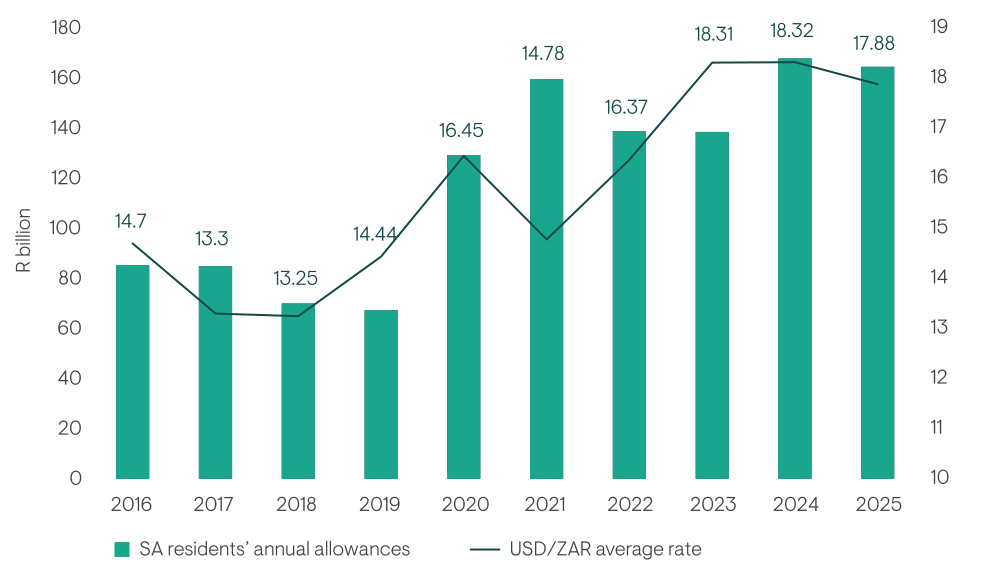
Despite periods of stronger local market performance and currency strength, South Africans continued to externalise a significant amount of capital last year. According to Currency Partners, more than R160 billion was externalised in 2025 alone at an average exchange rate of around R17.88 to the US dollar. Based on the 10-year period below, a substantial portion of these flows was externalised at a higher average exchange rate than in previous periods.
Figure 1: SA residents’ annual allowances vs average USD/ZAR (BOP 511 and 512)
Source: Currency Partners, 1 January 2016 to 25 December 2025.
This trend highlights an important point: offshore investing continues to form a structural part of how South African investors are building long-term wealth.
Further data on offshore flows from Currency Partners provides additional insight into how capital continues to move across borders. Offshore allowance utilisation has increased materially over the past decade as investors steadily build global portfolios.
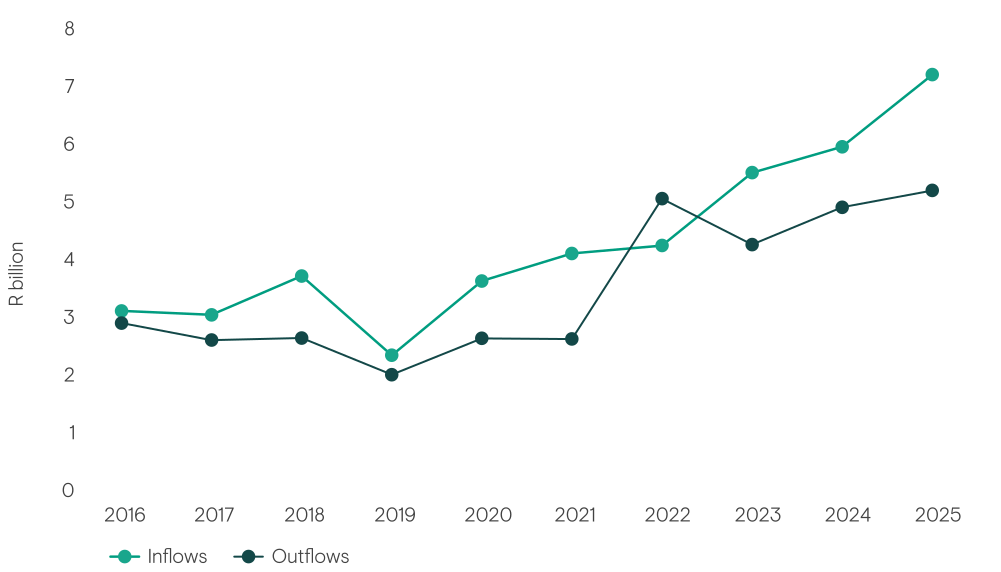
Figure 2: Inheritance capital inflows/outflows (BOP 409)
Source: Currency Partners, 1 January 2016 to 25 December 2025.
Inheritance flows are also increasing. The data reflects both funds inherited by South African residents from deceased estates located offshore and funds inherited by non-resident estates based in South Africa. These flows highlight how wealth is increasingly transferred across jurisdictions as families become more globally connected.
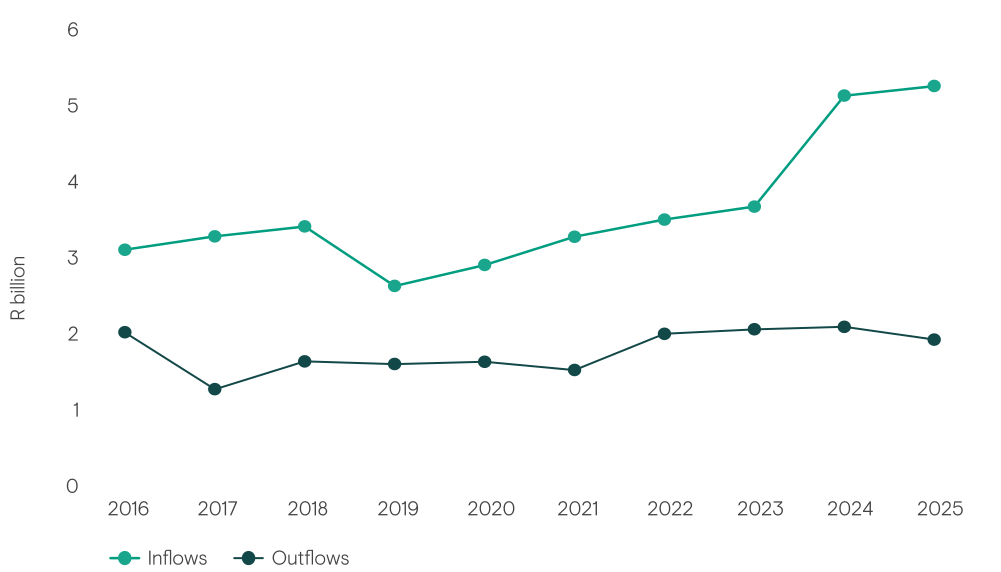
Figure 3: Tuition inflows/outflows (BOP 285)
Source: Currency Partners, 1 January 2016 to 25 December 2025.
Tuition-related outflows have remained strong, reflecting the growing number of South African families funding education abroad. Importantly, tuition fees paid directly to a recognised offshore educational institution are treated separately under exchange control regulations and do not form part of the single discretionary allowance. This enables families to fund education abroad without utilising their annual offshore allowance.
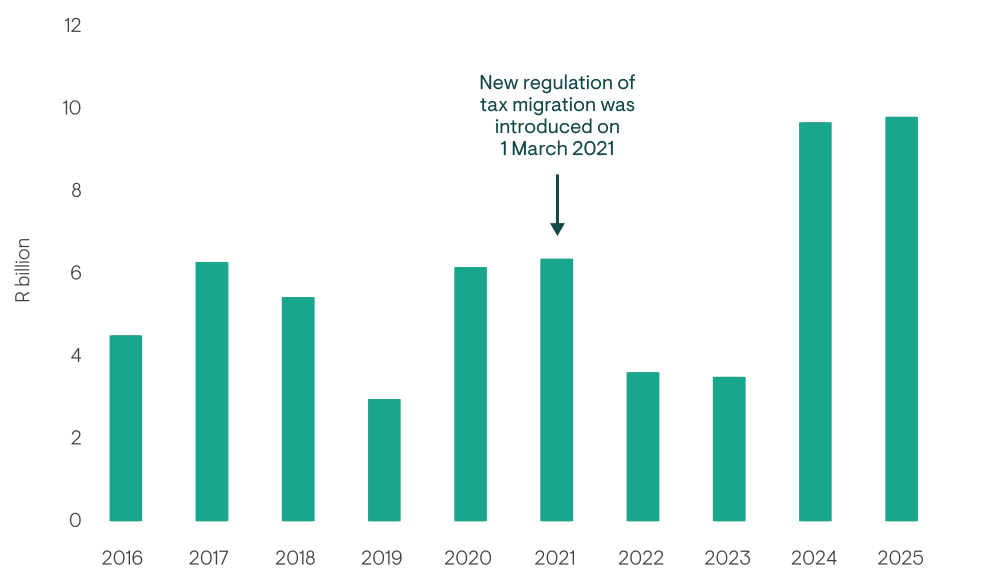
Figure 4: Capital flows for emigration (BOP 530)
Source: Currency Partners, 1 January 2016 to 25 December 2025.
The growing global footprint of South African families
These figures highlight an important reality: South African wealth is becoming increasingly global in nature. For many investors today, financial planning includes:
- Children studying overseas
- Family members living abroad
- Potential career opportunities abroad
- Property ownership in other jurisdictions
Offshore assets allow families to fund education, purchase property and support living expenses in foreign currencies when those needs arise. Obtaining offshore exposure is not just about chasing returns – it’s about aligning portfolios with the increasingly global nature of modern families. Our International Investment Portfolio has been designed with these realities in mind. It provides a dedicated offshore solution that allows investors to build global portfolios while benefiting from consolidated reporting that simplifies the management of investments across multiple jurisdictions.
One of the most common behavioural mistakes investors make is needing ‘proof’ before investing. They often wait until an asset class has already performed well before allocating capital. By then, valuations are often higher and much of the opportunity has already passed.
The same can be said about investing offshore. When global markets slow down or the rand strengthens, many investors hold off, assuming they should wait for the ‘right’ time. However, these periods often present an opportunity to build global exposure more efficiently, as a stronger rand allows investors to acquire more foreign currency for fewer rands. The challenge is shifting the mindset from currency timing to strategic allocation. Offshore investing should therefore not be reduced to a short-term view on where the rand may move next. It remains a core building block of structuring diversified and resilient portfolios.
Structuring offshore exposure for the long term
Recent regulatory changes have allowed individuals to externalise more capital. The single discretionary allowance has increased from R1 million to R2 million per calendar year, effectively doubling the amount South Africans can invest offshore without requiring tax clearance.
For many clients, this creates an opportunity to steadily build offshore exposure over time by consistently making use of their now higher annual allowances.
As advisors look to 2026 and beyond, the question is not whether clients should invest offshore, but rather how that offshore exposure should be structured for long-term wealth creation.
Advisors play an important role in helping clients:
- Align offshore investments with long-term life goals
- Select the right product structures for tax and estate planning
- Ensure offshore assets remain accessible when needed
- Take advantage of favourable currency conditions
In many cases, the real value lies not just in the offshore allocation itself but in how that capital is structured and positioned for future generations.
As South African families continue to live, work and invest across borders, ensuring that offshore assets are correctly structured, accessible and aligned with long-term goals will become increasingly important. For advisors, the opportunity lies in helping clients build global portfolios that can support their families for decades to come.
