Defensive bonds
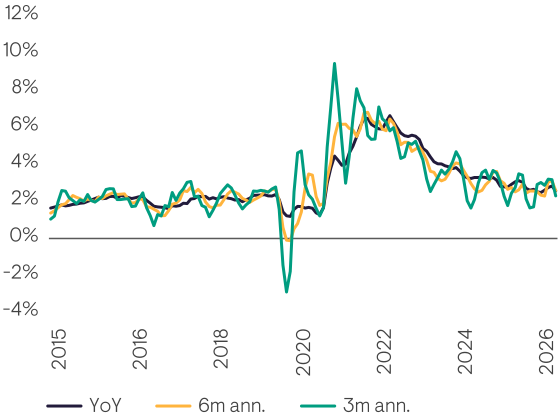
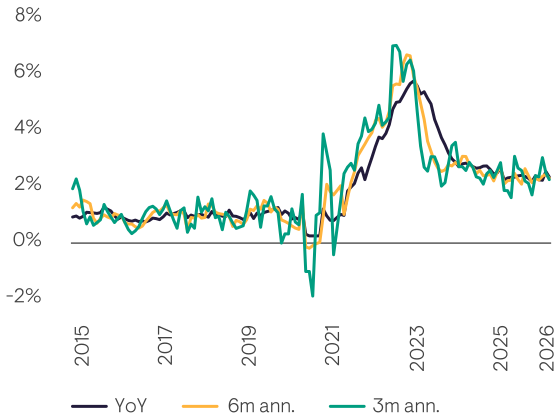
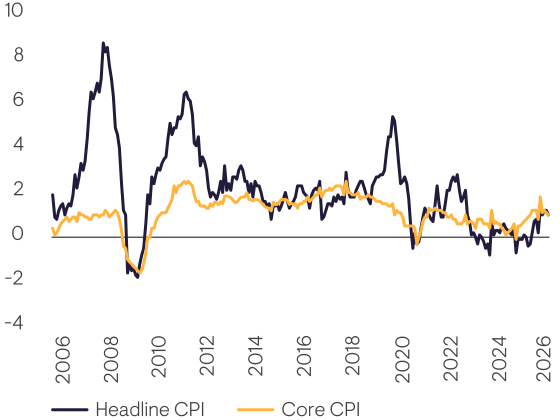
Bond markets have repriced notably amid the potential inflation risks stemming from the Middle East conflict. Most central banks are now expected to hike interest rates multiple times. The degree to which central banks follow through on current pricing will depend on how core inflation, inflation expectations and wages react to the energy shock. Inflation risks have picked up, with underlying price pressures and the potential for a new demand cycle emerging. Yet the current pricing appears to be extreme, suggesting bond markets hold some value. We prefer to express exposure where policy is already restrictive and likely to offset any upward shocks such as the UK and Australia.
| View as at |
30 June 26 |
31 March 26 |
31 Dec 25 |
| US |
|
|
|
| Eurozone |
|
|
|
| Japan |
|
|
|
| UK |
|
|
|
| China |
|
|
|
| max positive |
positive |
neutral |
negative |
max negative |
Positive: UK, Australia long end
Growth bonds & credit spreads
Developed market credit spreads have been volatile amid risk sentiment driven by the conflict in the Middle East, private credit concerns and AI disruption. Growing hopes of a US-Iran deal saw Brent crude fall almost 20% in May - its steepest monthly drop since the pandemic - easing stagflation fears and fueling a broader risk rally that has taken equities to new highs and pulled credit spreads back to multi-year tightness, with floating-rate credit (loans and CLOs) the standout performer. Issuance dynamics also look set to become a headwind as corporates, particularly in the technology sector, build up debt to fund investment. Given the limited upside, we do not believe current valuations compensate investors for taking credit risk and prefer to express growth risk through equity.
Overall, we remain selective in our approach to emerging market fixed income. While crude oil prices have eased back to pre-conflict levels as Middle East supply has recovered, refined fuel costs remain elevated and rising fertiliser prices, compounded by El Niño, continue to add upside risks to food inflation, particularly in regions that are highly reliant on imported fuel and are already enacting fuel rationing. The extent to which the positive progress on inflation across most emerging markets is affected by these pressures will be key to the extent to which bond yields can return to previous levels. We continue to focus exposure on areas where risk premia remain attractive and are supported by fundamentals, such as Brazil, Colombia and South Africa.
| View as at |
30 June 26 |
31 March 26 |
31 Dec 25 |
| EM HC |
|
|
|
| EM LC |
|
|
|
| US Credit |
|
|
|
| EU Credit |
|
|
|
| max positive |
positive |
neutral |
negative |
max negative |
Positive: South Africa, Colombia and Brazil local currency
FX
While we continue to believe that the medium-term outlook for the US dollar is for weakness to persist, driven by easing policy conditions, a waning public impulse and dedollarisation flows, in the near term,
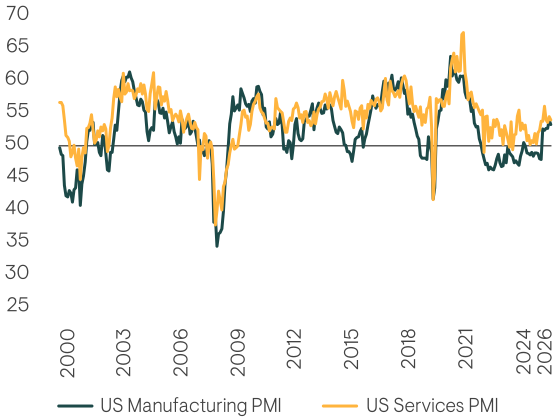
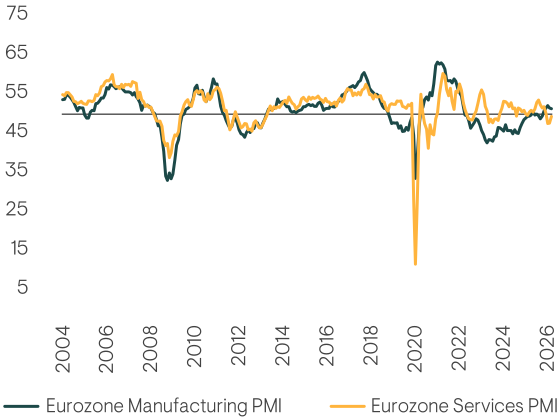
economic conditions look to be more supportive of US outperformance. Economic momentum is accelerating, supported by the lagged effects of earlier policy easing and ongoing fiscal spending. Regions like Europe are facing additional headwinds from reflexivity of the strong euro and energy price shock in the Middle East. In a multi-asset portfolio context, the US dollar provides an attractive hedge against potential stagflationary risks. As a result, we remain long US dollars within portfolios against European currencies. Selective emerging market currency exposure is attractive where risk premia remain elevated and structural improvements align with positive cyclical drivers, but with preference to fund from EUR rather than USD.
| View as at |
30 June 26 |
31 March 26 |
31 Dec 25 |
| USD |
|
|
|
| EUR |
|
|
|
| JPY |
|
|
|
| CNY |
|
|
|
| EM |
|
|
|
| max positive |
positive |
neutral |
negative |
max negative |
Positive: US dollar, Brazilian real, South African rand, Colombian peso
Negative: Euro, Swiss franc
Equity
US equities continue to benefit from easy liquidity conditions and a robust earnings backdrop. While select areas of the market, particularly those linked to the AI investment theme, have seen high levels of speculation and investor positioning build up, the ongoing global reflationary environment is expected to support a broadening out in market performance drivers and risk asset markets as a whole. The healthcare sector is attractive from a valuation perspective and given greater resilience to more stagflationary outcomes.
| View as at |
30 June 26 |
31 March 26 |
31 Dec 25 |
| US |
|
|
|
| Europe ex-UK |
|
|
|
| UK |
|
|
|
| Japan |
|
|
|
| Asia ex-Japan |
|
|
|
| EM vs. DM |
|
|
|
| max positive |
positive |
neutral |
negative |
max negative |
Positive: S&P equal weighted, US healthcare, Russell 2000, MSCI EM
Commodities
We continue to see compelling opportunities in natural resources, underpinned by structural demand tailwinds (electrification), supply constraints and attractive valuations (high free-cashflow yields and shareholder distributions) and widening fiscal deficits providing a further macro tailwind given the sector’s role as an inflation hedge. Within energy, the conflict in Iran and the wider Middle East has disrupted supply
and driven extreme oil price volatility that we believe energy equities are not fully pricing in, creating upside for active stock-pickers; more structurally, we see the oil market turning more constructive beyond the
US mid-terms as shale growth fades, OPEC spare capacity normalises and EV adoption disappoints.
Gold has retreated from its highs but is forming a new base around US$4,000/oz, supported by central-bank and Asian buying as countries diversify away from the dollar; Fed Chair Kevin Warsh’s hawkish stance is a near-term headwind, but fiscal constraints on the Fed and slowing growth skew risks to the upside, and with gold miners’ EBITDA margins still exceptional (>100% on average), we expect robust equity returns,
stronger still if gold moves higher. Elsewhere, the same regional disruption has tightened aluminium (a deficit likely into at least mid-2027) and nitrogen fertiliser markets (compounded by El Niño dryness, though
cushioned by elevated grain inventories), while copper looks better supported by government stockpiling despite a more balanced supply/demand outlook, though we see copper equities as fully valued.
| View as at |
30 June 26 |
31 March 26 |
31 Dec 25 |
| Energy |
|
|
|
| Precious metals |
|
|
|
| Base metals & bulks |
|
|
|
| Agriculture |
|
|
|
| max positive |
positive |
neutral |
negative |
max negative |