0:00
0:00
We recently celebrated the first tax-free savings account (TFSA) investor to cross the R1 million mark on the Ninety One Investment Platform. Read on to hear how they did it, and why this milestone matters far beyond the number.
When we launched, few believed
When we launched the Ninety One TFSA back in 2015, the idea was simple: use the recently released legislation to give South Africans a way to invest tax-free and let compounding work its magic.
However, many of the advisors I spoke to were sceptical. The R30 000 annual contribution limit (later increased to R33 000 and then R36 000) seemed too small to make a meaningful difference. Some felt it wasn’t worth the effort, “a waste of time, and an admin effort”, as one put it.
Yet, 10 years later, the numbers tell a very different story.
A R1 million TFSA – built on patience and compounding
One of our long-time supporters, an independent financial advisor who uses the Ninety One platform for clients and for his own investments, recently became our first TFSA millionaire.
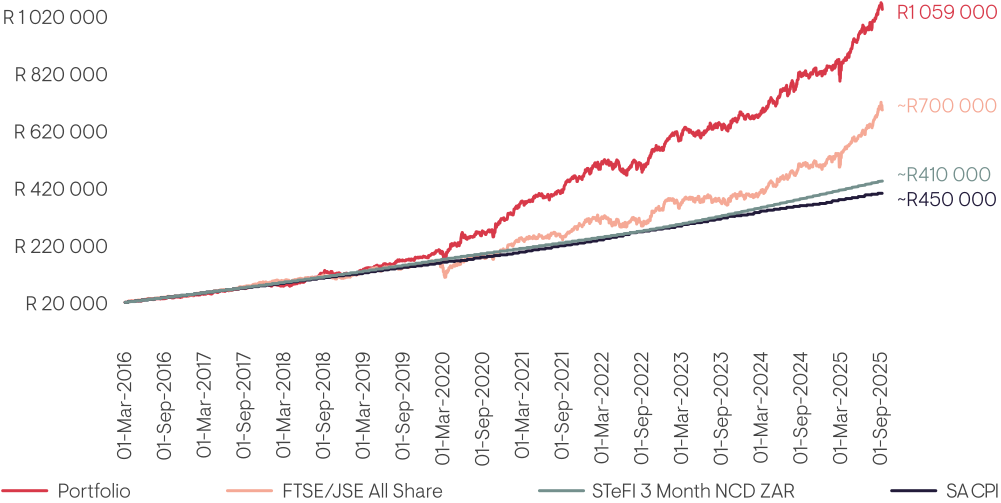
Over the past decade, he has contributed a total of R320 000, mostly via monthly debit orders. Those contributions have grown to R1 059 000, reflecting an annualised internal rate of return of just over 21%, completely tax free.
That translates into investment growth of almost R750 000, more than double what a simple JSE index tracker would have delivered over the same period.
To put the performance in context, it is best illustrated by how R320 000 would have grown over the decade if it had been invested elsewhere*:
Figure 1: The performance of the TFSA versus the FTSE/JSE All-Share Index, cash and inflation
Source: Ninety One (as at 22 October 2025).
*For illustrative purposes only. The comparison assumes identical contributions and timing to those made in the investor’s TFSA, but invested in the respective indices instead.
The turning point — from offshore to opportunity
Like many South Africans, this investor initially placed his TFSA 100% offshore. Then came the onset of Covid-19 in early 2020. Markets fell sharply, the JSE slumped, and the rand blew out from around R15.50 to R18.50 to the US dollar.
Where most investors may have frozen or panicked, he acted. Seizing the opportunity created by the weak rand, he sold his offshore exposure and moved his entire TFSA into local South African equities, perfectly timing it when valuations were at their lowest.
That decision was pivotal. As the local market rebounded and the rand recovered, he captured the full upside of the JSE’s post-Covid rally, all within the tax-free wrapper.
Since then, he’s kept his approach simple, holding just two South African equity funds, staying invested and allowing time and compounding to do the rest.
What this teaches us
Was it luck or foresight? Probably a bit of both. But there’s no denying the power of staying engaged, understanding market cycles, and being willing to act when opportunity knocks.
While timing the market is almost always a matter of luck, the most important lesson lies in what you choose to invest in. A TFSA works best as a long-term investment vehicle, skewed towards growth assets like equities, not parked in cash or bank deposit TFSAs that barely keep up with inflation.
The power of compounding only works when your capital is exposed to growth. And, of course, having a good independent financial advisor can make all the difference; someone who helps you stay disciplined, patient, and invested through the noise.
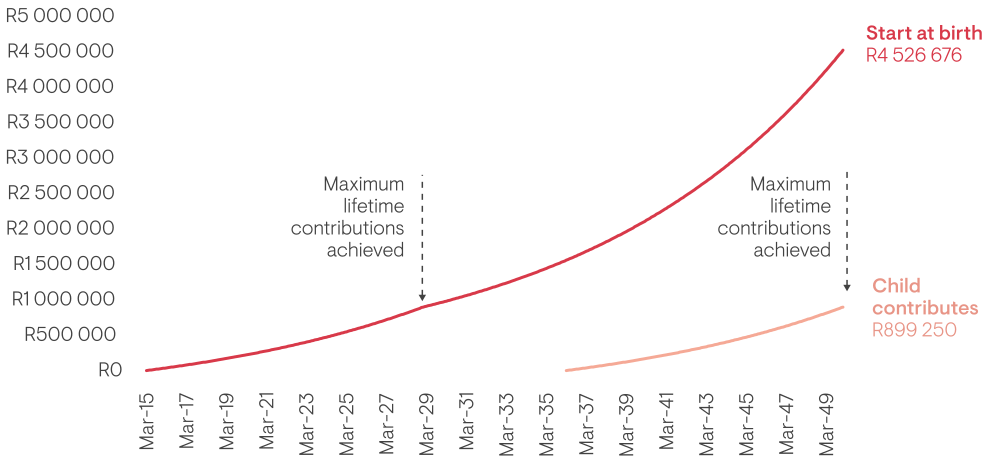
It is also worth mentioning that this advisor didn’t stop at his own TFSA. He opened accounts for his wife and two children as well. For his kids, this is a gift that could be life-changing if they have the patience to leave the money untouched until retirement. Starting young means decades of tax-free compounding ahead of them, something few investments can match.
And because they are all linked as family group on the Ninety One platform, they benefit from family pricing, which reduces their admin fees across accounts. That lower fee may sound small, but over decades it compounds too, further boosting long-term returns.
Figure 2: TFSAs are a great way to give children a head-start in life
Source: Ninety One calculation.
