Background
Yvonne, a 70-year-old divorcee, had built a sizeable estate of over R30 million. She held £1 million in a UK bank account, which was creating unintended tax and succession risks. As a South African tax resident with two adult sons (also SA tax residents) and grandchildren, Yvonne’s priorities were to:
- Reduce her ongoing tax burden by reducing the amount of interest earned in her offshore bank account.
- Protect her heirs from unnecessary estate duty and UK situs tax.
- Avoid offshore probate.
- Create structures that allow for a progressive and tax efficient transfer of wealth to the next generation during her lifetime.
Challenges
The UK bank account exposed Yvonne to:
- South African income tax of 45% on annual interest
- On death, given the double taxation agreement South Africa has with the UK for estate duty, a combination of:
- South African estate duty of 25% (as her worldwide estate is over R30m) on the first £325 000, and
- Potential UK situs tax of up to 40% on the balance above the nil band of £325 0001
- Executor’s fees at more than 4%
- Foreign probate
- A lack of liquidity
This combination of taxes could significantly erode the capital available to her heirs. With more than one jurisdiction involved and the UK bank account being subject to probate on death, it could also cause delays in the transfer of the inheritance to her heirs.
Planning and implementation
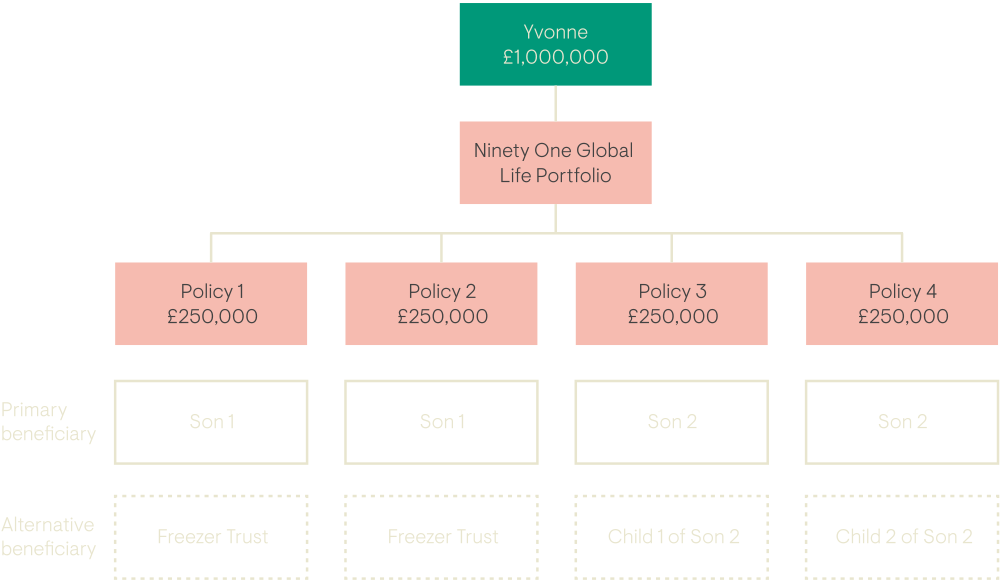
After a thorough analysis, Yvonne liquidated the UK bank account and reinvested the proceeds into a global policy wrapper, the Ninety One Global Life Portfolio. The product is a sinking fund policy and allows for one loan and one surrender during the first 5 years. The investment was structured across four separate contracts of £250 000 each to provide additional liquidity within the first 5 years and to provide the flexibility to allow for phased estate planning.
Yvonne was a cautious investor and wanted to remain invested in cash or near cash. To retain GBP exposure, the funds were allocated to a Sterling Money Fund within the wrapper. While the Money Fund offered a yield pick-up over the original bank account, her key motivation was to create tax efficiency. Its roll-up structure allowed her to replace the income tax payable on her interest in the bank with capital gains tax (CGT) in the fund. By combining with the wrapper, she ensured that an effective rate of 12% CGT would only be triggered when units in the fund were sold, allowing for both a lower effective tax rate and a deferral of when the tax would be payable versus holding cash in the bank.
The beneficiary nomination also ensured that the deferral of tax could be continued on death as her base cost would carry over to her sons were they to continue with the policy. Should she redeem part or all of the investment during her lifetime, she could take comfort from the fact that Ninety One Assurance Ltd would be responsible for the calculation and payment of tax to SARS.
Crucially, Yvonne nominated:
- Her two sons as primary beneficiaries (See Figure 1 below).
- Alternative beneficiaries to ensure that the benefit would flow to their respective children if there were unforeseen circumstances that would see either of her sons predecease her.
- A freezer trust as the alternative beneficiary for the policies in favour of son number 1, as his children were minors at the time. This was to counter the fact that the SARB does not allow minor children to inherit offshore investments and so keep the assets offshore.
Figure 1: Multiple contracts offer flexibility and tax-efficient succession planning
Source: Ninety One, for illustrative purposes only.
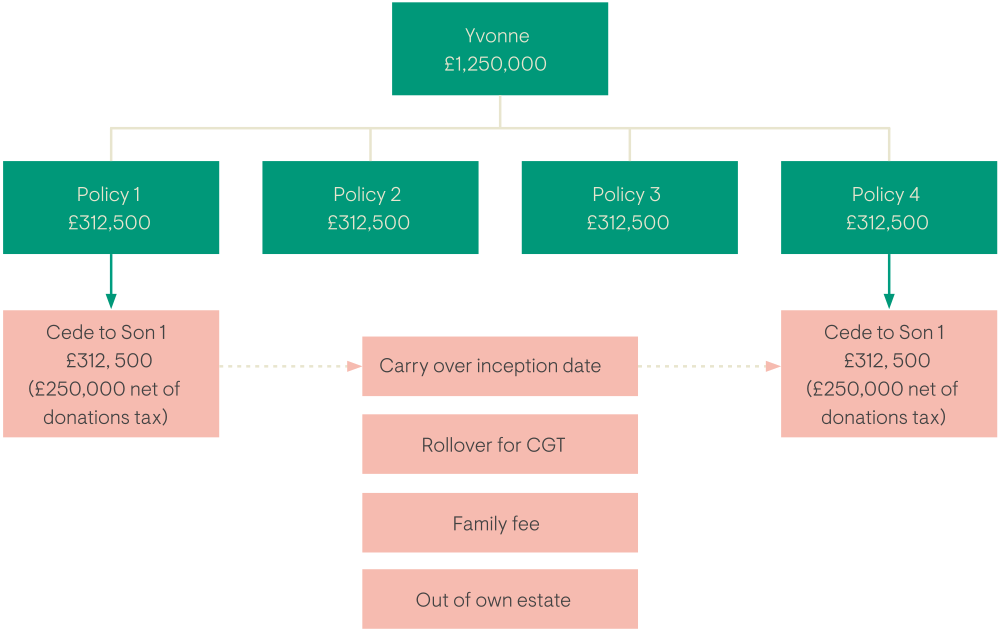
In our example, 5 years after establishing the policy wrapper, Yvonne reassessed her financial situation and decided that she was comfortable to pass some of her wealth to her sons. She did this by ceding two of the four contracts to her sons. While this triggered donations tax at 20%, it allowed her to remove these assets from her estate, thereby avoiding estate duty on that portion of capital, plus any future growth, on her death (which would otherwise have been taxed as estate duty at 25% on her passing). The ceded contracts retained their original inception dates and base costs, and no CGT was payable. This rollover relief arises from the fact that the life company remains the owner of the investment and it is only the underlying policyholder that changes. Yvonne kept the other two policies in her own name.
Figure 2: Using contract cessions to manage the transfer of wealth
Source: Ninety One, for illustrative purposes only.
Outcome
Had Yvonne retained the UK bank account and held it until her death 15 years later, the family would have received £843 199 after income tax, UK Situs taxes and executor’s fees. In other words, significantly less than the £1m she started with 15 years prior.
By contrast, using the policy structure and ceding two of the four contracts after five years resulted in a combined family value of £1 508 888 by year 15, on her death. This restructure significantly improved the wealth ultimately received by her family without compromising her tolerance for risk, as she remained invested in cash throughout the illustration. Figure 3 provides a breakdown of the projected values and key assumptions used in the modelling.
Figure 3: Optimising intergenerational wealth transfer through product structure and phased estate planning
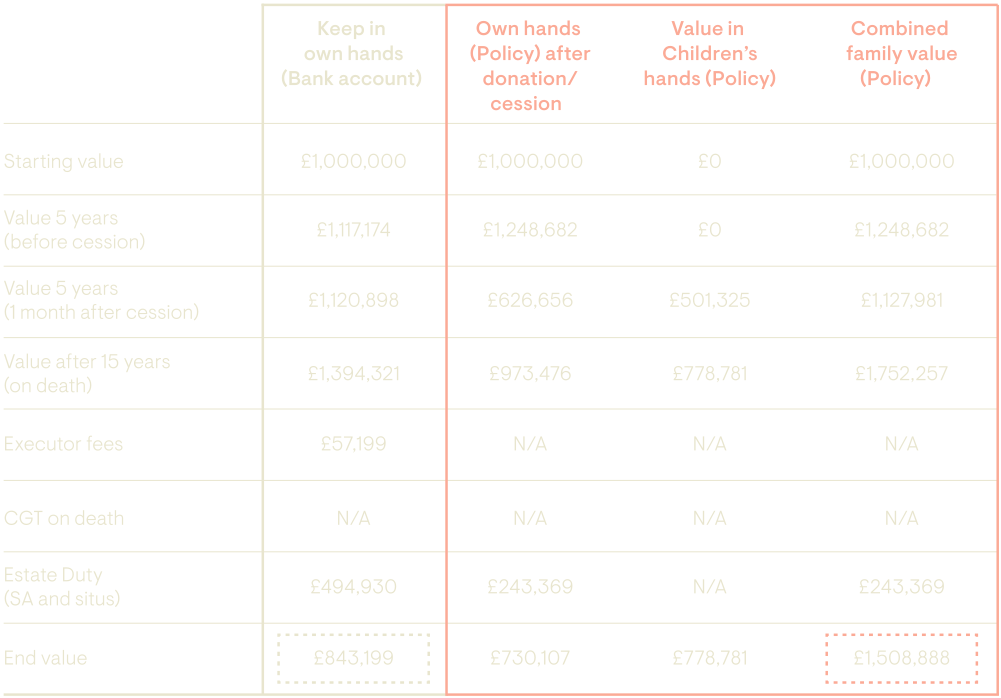
Source: Ninety One, for illustration purposes only. Growth is assumed to be 4% p.a. for the bank account and 5% for the policy wrapper. Platform fees were deducted from the policy wrapper and advice fees of 0.25%. Income tax of 45% was deducted annually from the bank account. Executor’s fees were applied at 4.03%, Donations tax was applied at 20% on cession to the children. Estate duty was applied to the dutiable estate value at 25%.
Lessons and insights
- Multiple contracts within a policy wrapper structure provides the flexibility to cede selected contracts (to a single primary beneficiary) over time, enabling a phased approach to estate planning.
- Using the Donations tax tiers effectively (20%) can, under certain circumstances, be more efficient than estate duty (25% in this case), especially where foreign estate taxes are involved. When combined with a policy wrapper this also provides the opportunity to avoid executor’s fees on death.
- Using roll-up funds within a policy wrapper helps reduce the income tax burden for high marginal taxpayers, as the income tax liability is replaced by CGT on disposal at 12%. Investors can also maintain their preferred currency exposure as Ninety One offers money funds denominated in Euro, GBP and USD (as Yvonne chose to do in GBP).
- Beneficiary and alternative beneficiary nominations provide succession flexibility without requiring changes to a will or triggering probate. Policy wrappers inherited by nominated beneficiaries avoid executor’s fees and delays associated with the winding up of an estate.
- Where a trust or freezer trust is nominated as the beneficiary or alternative beneficiary of a policy wrapper, it is important to confirm that the investment platform allows for this and that the freezer trust is allowed to continue with the policy. Not all providers support such nominations.
- UK situs tax can materially reduce value for SA tax residents holding UK-based assets directly. Using a global policy wrapper avoids potential exposure to situs tax.
- Consolidating family investments on a single platform enables fee aggregation across the four contracts, unlocking family-level pricing and reporting. This also enables the advisor to establish a relationship with the two sons so that they understand the implications of the decisions they make going forward. This approach supports cost efficiency and keeps the advisor at the centre of long-term wealth planning.
Download PDF
1 Although Yvonne’s UK assets will be subject to South African estate duty, situs tax on value above the nil band of £325k could also apply. South Africa has a double taxation agreement (DTA) with the UK for estate duty, but the credit in respect of the DTA is not automatically applied. It is the executor’s responsibility to ensure the correct process is followed.