0:00
0:00
Key takeaways
- Infrastructure is essential to growth. Consumer spending cannot carry the economy indefinitely. Businesses need reliable electricity and efficient freight transport to expand production and reach markets.
- Reform can unlock private investment, but results take time. Electricity shows what can happen when regulatory changes create the conditions for investment and projects move through development and construction.
- Freight rail offers further opportunities, but important constraints remain. Opening Transnet’s network to private operators is a step forward. Reliable infrastructure, access to finance and commercially viable services will be critical to increasing capacity.
- Infrastructure need does not guarantee an investable project. Investors must assess revenue prospects, contractual arrangements and who carries the risks before committing capital.
South Africa needs more fixed investment to grow faster. Consumer spending has helped keep the economy moving, but as we have said previously,1 it cannot do all the heavy lifting. GDP contracted by 0.2% in the second quarter of 2026, fixed investment fell for a second consecutive quarter, and official unemployment rose to a staggering 33.6%.2 Treasury has cut its 2026 growth forecast to 1.2%.3
The next phase of growth will depend on businesses investing and expanding. That is difficult without reliable electricity and efficient ways to move goods. These are essential to increasing production, connecting businesses to markets and supporting economic growth.
However, infrastructure takes time to deliver. Policy and regulatory reforms must first create the conditions for investment. Projects must then be planned, financed, built and operated before they lift output. The benefits may take years to materialise but can last for decades.
Investing in the backbone of the economy
Jobs
Renewable energy
on average
Connectivity
Transportation
per annum
Source: Ninety One data, as at September 2026.
From electricity reform to economic activity
South Africans know this from recent painful experience. Load shedding affected households and businesses for more than a decade. At its peak in 2023, it is estimated to have shaved about 1.5 percentage points off real GDP growth.4 A combination of improved performance from Eskom’s coal fleet and additional private-sector generation has since reduced the economic cost substantially. In 2024 the Reserve Bank projected the drag would fall to 0.6 percentage points in 2024 and 0.2 in 2025, and be close to zero.5
The improvement reflects better management and maintenance of the coal fleet, with Eskom’s Energy Availability Factor (EAF) also improving in recent years. Policy changes have also enabled greater private-sector participation in electricity generation. These include amendments to Schedule 2 of the Electricity Regulation Act (ERA), which removed the licensing threshold for embedded generation, and the Electricity Regulation Amendment Act, signed in August 2024, which provides for a more competitive electricity market.
The investments behind this change took time. Since the launch of the Renewable Energy Independent Power Producer Procurement Programme (REIPPPP) in 2011, South Africa has attracted more than R292 billion in renewable energy investment and secured over 9.6GW of generation capacity.6 The reforms created the conditions for investment, but the projects still had to be developed, financed and built before they could supply power.
The Electricity Regulation Amendment Act provides for a five-year transition to a competitive wholesale electricity market, creating further scope for private investment. The transition is already creating opportunities for electricity traders and aggregators, with the National Energy Regulator of South Africa (NERSA) having issued licenses that allow them to participate in the renewable energy market.
The next step is to extend private-sector participation to the transmission network, where the Independent Transmission Projects (ITP) programme is intended to bring private capital and expertise into the development of new grid infrastructure. A Credit Guarantee Vehicle (CVG), which National Treasury is setting up with support from the World Bank, will provide credit enhancement to help attract private finance.
National Treasury expects structural reforms and higher investment to help lift economic growth from a forecast of 1.6% in 2026 to 2% by 2028,7 although infrastructure constraints remain a drag on the outlook.
Electricity is only one part of the picture. It does, however, show how regulatory reform and an enabling environment can attract private sector investment and help address constraints on economic activity.
Rail’s next phase
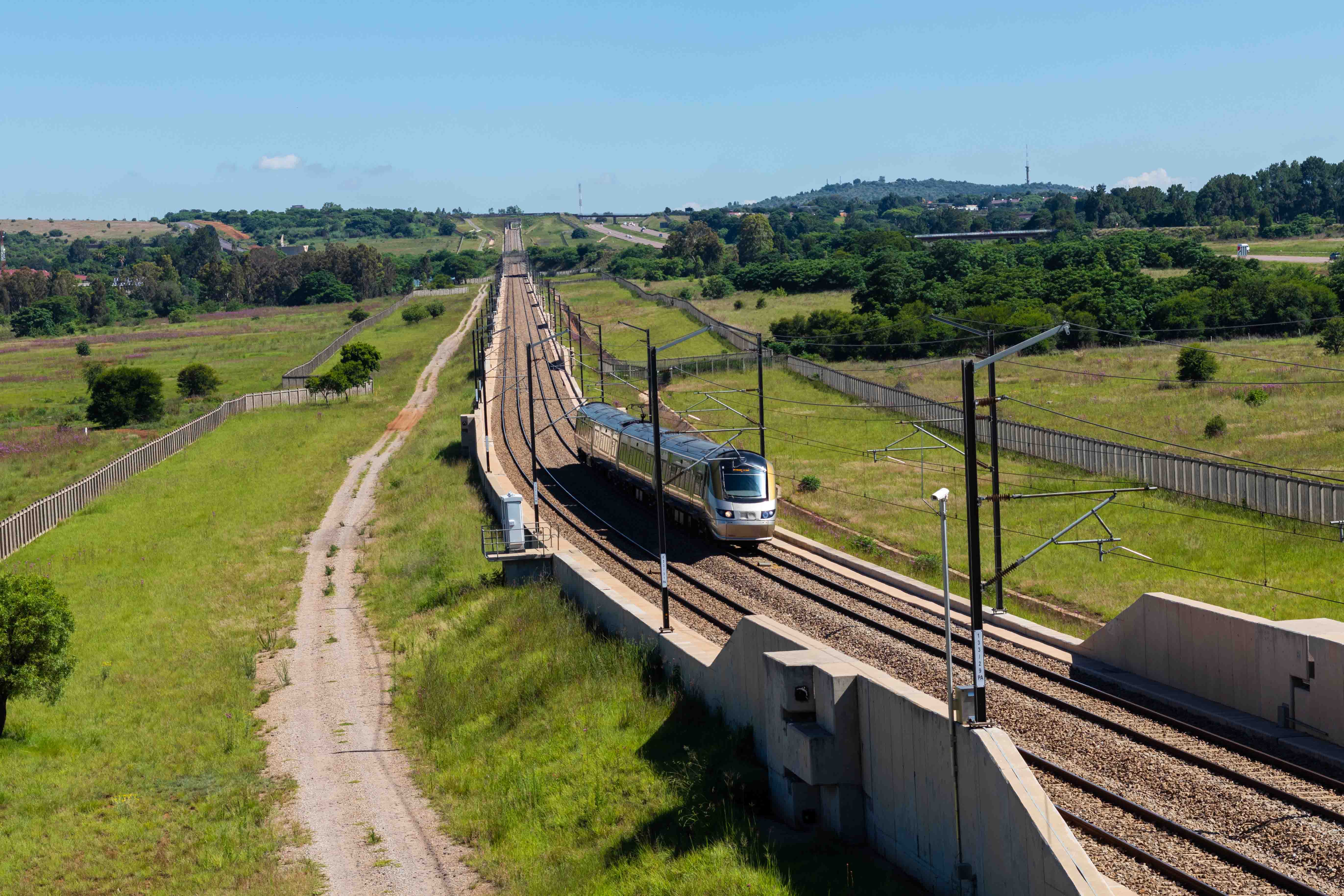
Freight rail is at an earlier stage of the reform process. In May, 11 private operators were allocated access to Transnet’s network. In September, Transnet Rail Infrastructure Manager published an updated Network Statement, setting out the framework for access. Operations are expected to begin in 2027.
The potential addition to freight capacity is significant. Transnet moved 167.9 million tons in the 2025/26 financial year, up from 160.1 million the year before.8 The national objective is to increase volumes to 250 million tons a year by 2030.9 The new operators plan to move up to 20 million tons annually, although reaching that level will depend on getting viable services up and running.
Opening the network is an important first step, but operators will also need locomotives, customers and finance, as well as reliable rail infrastructure. Transnet is working to address some of these constraints through its recovery and investment programme. National Treasury has allocated R1.8 billion through the Budget Facility for Infrastructure in 2026/27 towards reinstating the North Corridor, including work to improve capacity and restore infrastructure.10 These investments will be important in supporting both existing services and the new operators.
Private-sector participation is also moving beyond access to the network, with several projects now entering the procurement process. The RFQ for the Richards Bay Dry Bulk Terminal has closed, while Transnet has issued an RFQ for a private sector partner in the strategically important Ngqura manganese export corridor, a project that could require investment of up to R44 billion.11 An RFQ for the Johannesburg–Durban container corridor is also expected before year-end.
The investment must stand up
Knowing that infrastructure is needed is one thing. Financing it requires a closer look at who will pay, how reliable those revenues are and who carries the risk if the project runs into trouble. A project can make economic sense but struggle to attract private capital if its contracts are unclear or its revenues are too uncertain.
This is where patient investment and careful judgement matter. Investors need to understand what reform has made possible, what still needs to happen and whether the commercial arrangements offer a reasonable prospect of returns over the life of the asset. The need may be obvious, but that alone does not make a project investable.
Electricity and freight rail illustrate both the opportunity and the work still required. Regulatory reform has opened the way for private capital to add generation capacity. In rail, the opportunity is emerging but will depend on whether the network can support reliable services and whether operators can build sustainable businesses.
For investors, the task is to distinguish between projects that are needed and those that can deliver acceptable returns. This is what will determine how much private capital is ultimately mobilised to build the infrastructure South Africa needs.
1 Consumer in the crossfire, July 2026.
2 Statistics South Africa Q2 labour force survey, August 2026.
3 National Treasury, Medium Term Budget Policy Statement 2026, 21 October 2026.
4 Electricity sector progress and the economic impact.
5 Electricity sector progress and the economic impact.
6 BDO-SA-2025-Renewables-Report.pdf.
7 National Treasury, Budget Review 2026, Chapter 2.
8 Transnet media statement, 10 September 2026.
9 Transnet, 13 May 2026.
10 National Treasury, 2026 Estimates of National Expenditure, 25 February 2026.
11 South Africa puts $2.7 billion manganese corridor on the market, February 2026.