In the volatile world of fast-moving consumer goods, few companies embody the triumphs and travails of the industry quite like Tiger Brands. A household name and bellwether of domestic staples, South Africa’s largest food producer has in recent years served as a cautionary tale of strategic overreach, operational drift, and the heavy cost of reputational failure. But under the stewardship of new management and with a more grounded operating philosophy, Tiger Brands is attempting something few firms in its position have successfully done before: a quiet but credible reset and turnaround. Early results suggest it may be succeeding, with investors in our SA 4Factor Equity and Multi-Asset portfolios already benefiting from our recently acquired overweight exposure.
While the future looks bright, the past decade was anything but
In 2012, Tiger Brands embarked on an ambitious offshore expansion into Africa by acquiring Nigeria’s Dangote Flour Mills. The transaction eventually unravelled, resulting in a R2.7 billion write-down and an ignominious US$1 resale. Similar misadventures followed shortly thereafter, first in Kenya and then in Mozambique. By 2015, the firm’s African expansion had failed, reflecting deeper issues of strategic incoherence and overreach. The costly missteps led to sweeping changes across its leadership structures, and perhaps unsurprisingly, focus shifted towards a more familiar landscape, its domestic business.
Further challenges soon emerged, and the situation continued to deteriorate. After a period of better performance, a deadly outbreak of listeriosis in 2018, linked to its Enterprise Foods division, resulted in more than 200 deaths and a public relations crisis. The episode erased R4.4 billion in market value and left a legacy of litigation, with a settlement proposal still under negotiation. Overlaying this was the broader malaise of the COVID-19 era. Supply chain disruption, a bloated cost base, and poor strategic decisions compounded the company’s woes. A decade after its disastrous international expansion, Tiger Brands had seemingly lost its operational and strategic edge in the domestic market, an area where it had once flourished.
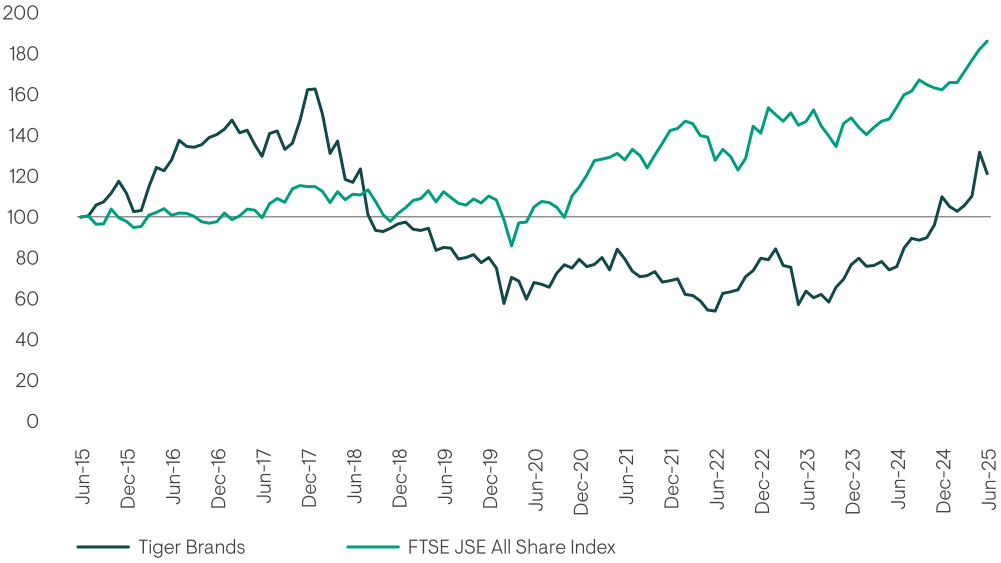
The past decade proved to be an unkind and volatile period for the company, and even more so for investors. As shown in the graph below, those who purchased the counter in April 2015 have only recently broken even.
Figure 1: Tiger Brands - Share price return, based to 100 on 30 June 2025
Source: Bloomberg and Ninety One, July 2025.
We were more fortunate in terms of our exposure. Our earnings revisions approach to investing saw us avoid the worst of Tiger Brands’ African missteps, capture the bulk of the firm’s domestic refocus, while missing the fallout of the listeriosis outbreak altogether.
Figure 2: Tiger Brands - Active weight %

Source: Ninety One, July 2025.
A CEO with a mandate
Into this breach stepped Tjaart Kruger. Appointed CEO in November 2023, the former Premier Fast Moving Consumer Goods (FMCG) chief was tasked with a full-scale rehabilitation. His mandate was clear: re-establish competitiveness, restore earnings momentum, and lay the foundation for long-term sustainable growth. His playbook, while not novel, was simple: decentralise authority, enforce capital discipline, and prune the portfolio of underperforming assets.
At the heart of Kruger’s turnaround strategy was the introduction of a federated operating model that shifted accountability to business unit heads, an overdue response to years of top-heavy governance. Empowered managers answered the call, responding with improved pricing execution, more agile supply chains, and a noticeable uptick in innovation velocity.
Instead of seeking growth through acquisitions, a playbook that had failed Tiger Brands in the past, Kruger focused inwardly by improving productivity across the firm’s existing assets. A R560 million investment in plant automation, launched in the first half of 2025, exemplified the firm’s new ethos. The move formed part of a broader capex programme geared toward scale-driven cost leverage, including planned investments in supply chain optimisation and a new “super bakery” designed to drive long-term cost competitiveness in core categories.
Complementing these structural changes was a deliberate effort at portfolio rationalisation. Kruger and his team aggressively pruned loss-making assets, with more than R4 billion in non-core, margin-dilutive business removed from the group’s balance sheet, thereby releasing capital, lifting margins, and improving operational focus.
Commercial discipline also improved, with the company opting to become more selective and strategic in its pricing and promotional strategies. Margins consequently benefited, especially within food segments, where price/mix began to outpace volume, a key indicator of sustainable profitability.
Margins begin to speak
Today, the firm’s strategic shift is starting to yield results. Group operating profit has risen 30% year-on-year in the most recent reporting period, with earnings before interest and tax (EBIT) margins expanding to 9.6%, up from 7.5%. Core food margins approached 10%, close to management’s medium-term goal of double digits.
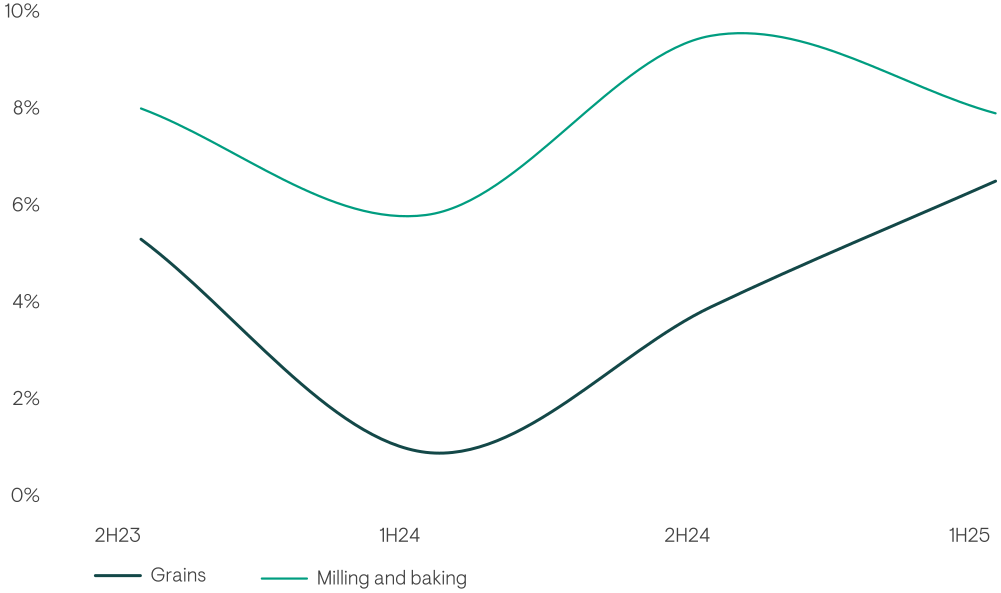
Divisional performance was broadly constructive. Milling and Baking improved to 8.5% margins, with a near-term target of 9.4%. The Grains business posted a sixfold profit increase, buoyed by stabilising input costs. Snacks and Treats weathered inflationary headwinds with admirable pricing resilience. Home and Personal Care, by contrast, remained subdued amid supply-side constraints.
Crucially, this is a quality-led recovery and not sentiment-driven. While volume growth remains tepid, price/mix dynamics have improved. Less profitable volume has been chucked, and efforts to rejuvenate logistics and informal trade channels are laying the groundwork for more durable top-line expansion.
Figure 3: Key divisions - margin turnaround
Source: Bloomberg and Ninety One, July 2025.
A market repricing in motion
Investors have taken notice. Tiger Brands now trades at a 12-month forward P/E above its five-year average, suggesting the market is beginning to price in not just recovery, but renewal. With a net cash position, continued asset disposals, and the prospect of special dividends and share buybacks, the balance sheet offers optionality while operational earnings upgrades remain in play.
Even more encouraging is the improving return on equity, a signal of operational quality that had long eluded the previous leadership. Management has also left the door open for targeted, earnings-accretive bolt-on acquisitions, offering further support towards the company’s equity rating.
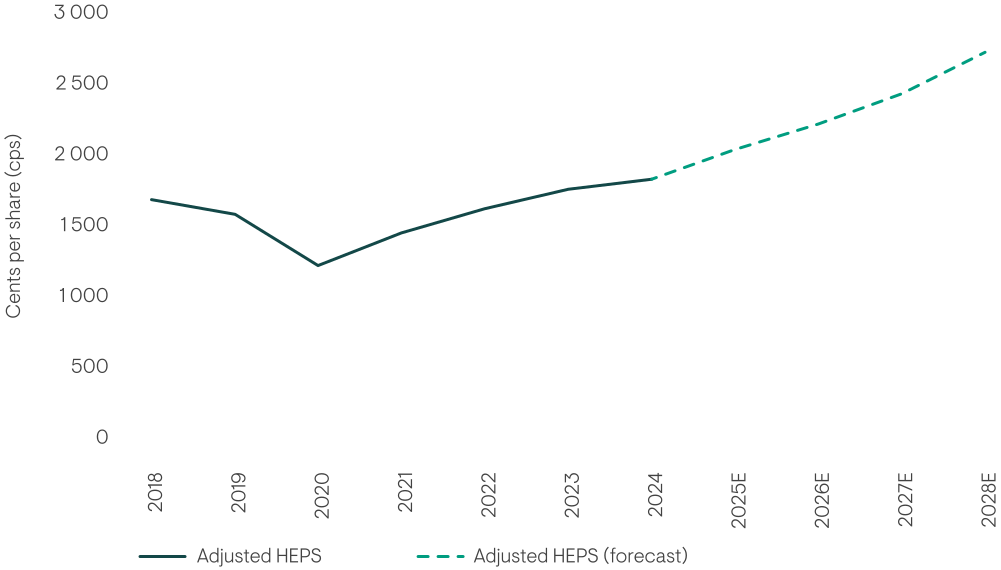
With the company’s operational turnaround gaining traction and its earnings revisions more entrenched, we have steadily increased our exposure to the counter and now hold an overweight position within our 4Factor Equity and Multi-Asset portfolios. This position has already proved beneficial for investors over the short term, with the counter placing among the main contributors to performance year to date. The medium-term trajectory of the company looks equally promising, with double-digit earnings growth expected over the next three years, ahead of market expectations. This earnings growth trajectory, coupled with the potential for further special dividends and share buybacks, provides an attractive return profile for shareholders.
Figure 4: Forecasted earnings growth looks promising
Source: Bloomberg, Tiger Brands and Ninety One, July 2025.
Not yet the finished article
Of course, risks remain. ESG disclosures, still below best-practice standards, could become a flashpoint, particularly among institutional investors with global mandates. Legacy legal issues still linger on the balance sheet. And as always, execution, especially in volatile macro conditions, remains the decisive variable. But the direction of travel is unmistakable. From the missteps of the past, Tiger Brands is now fashioning a leaner, more credible version of itself. No longer considered merely as a deep value thesis, the company is becoming a structurally improving consumer staples name, with optionality. With improving operational quality, disciplined capital allocation, and balance sheet flexibility, we believe that this is a recovery narrative worth watching.