0:00
0:00
Global markets have delivered strong returns over the past year, but the path has been far from straightforward, with leadership unusually concentrated. Technology companies have driven much of the global rally, while in South Africa, the surge in precious metals has dominated local equity performance1.
In this environment, performance depends on identifying opportunities across sectors, regions and asset classes as market dynamics evolve.
The strong performance of our Balanced strategy over the past year reflects this approach. Returns were not driven by a single theme, but by a series of investment decisions across the portfolio, from stock selection to asset allocation, as opportunities emerged in different parts of the market.
Precious metals and resources
Gold and precious metals exposures were important contributors over the period. The gold price began its strong run during 2024, supported by a combination of safe-haven demand amid geopolitical uncertainty and growing concerns about the US dollar’s long-term outlook.
The rally accelerated through 2025 as central bank demand strengthened and investors increasingly looked for assets that could hold value in an environment of high debt and persistent fiscal deficits. This came after more than a decade of US dollar strength after the Global Financial Crisis, during which the currency appreciated significantly against most major peers before peaking in 2022. As confidence in that strength faded, demand for real assets increased.
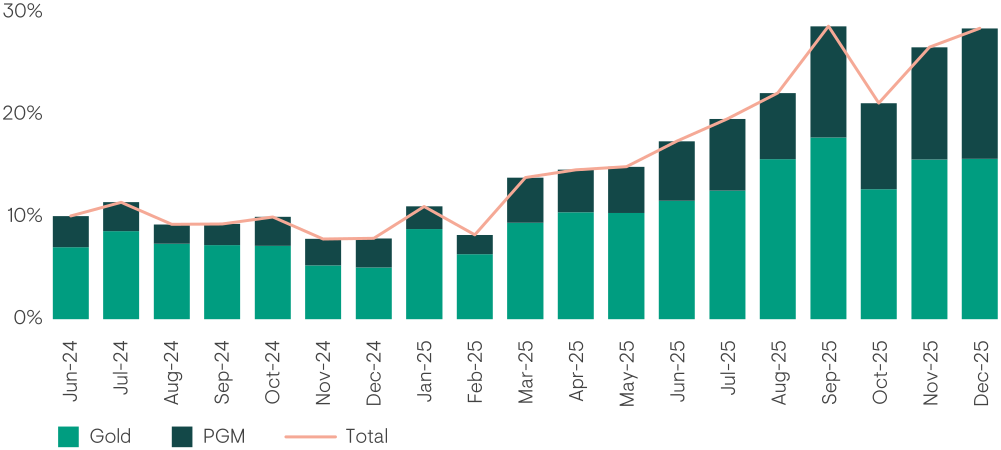
Gold, which sits outside the fiat monetary system, benefitted as both investors and central banks increased allocations as a store of value. The portfolio gained exposure through a combination of a gold ETF and selected mining companies. While the ETF provided direct exposure to the metal, gold miners offered more leveraged participation in the rally as higher gold prices translate quickly into expanding profit margins. Through our earnings-focused investment approach, we were able to pick up on this improvement in earnings expectations to the benefit of our clients.
Figure 1: Precious metals exposure over time (as a percentage of SA equities)
Source: Ninety One.
Platinum-group metals (PGMs) were another contributor. While these metals often move alongside gold in commodity cycles, their demand is also tied to industrial activity. In particular, platinum and palladium are used in catalytic converters in internal combustion and hybrid vehicles. With electric vehicle adoption progressing more slowly than initially expected, demand for hybrid and traditional engines remained resilient, providing additional support for PGM prices.
Technology and global equities
Selective exposure to global technology and semiconductor companies also contributed to returns. Companies linked to the build-out of artificial intelligence infrastructure, including TSMC and Broadcom2, benefitted from continued strength in capital expenditure across the technology sector.
Having a clear focus on sustainable positive earnings trends, this exposure reflected a targeted approach rather than simply chasing the broader technology rally. The focus remained on businesses most directly tied to the AI investment cycle, particularly suppliers of the underlying infrastructure. Positions were adjusted during the year as valuations shifted and the competitive landscape evolved.
South African opportunities
Local assets were another meaningful contributor to performance. We maintained a constructive view on South Africa following the formation of the Government of National Unity in 2024. Financial markets responded positively to the prospect of greater political stability, with the rand strengthening and bond yields declining as investors began to reassess the domestic outlook. That said, the recovery was uneven, with not all boats rising together.
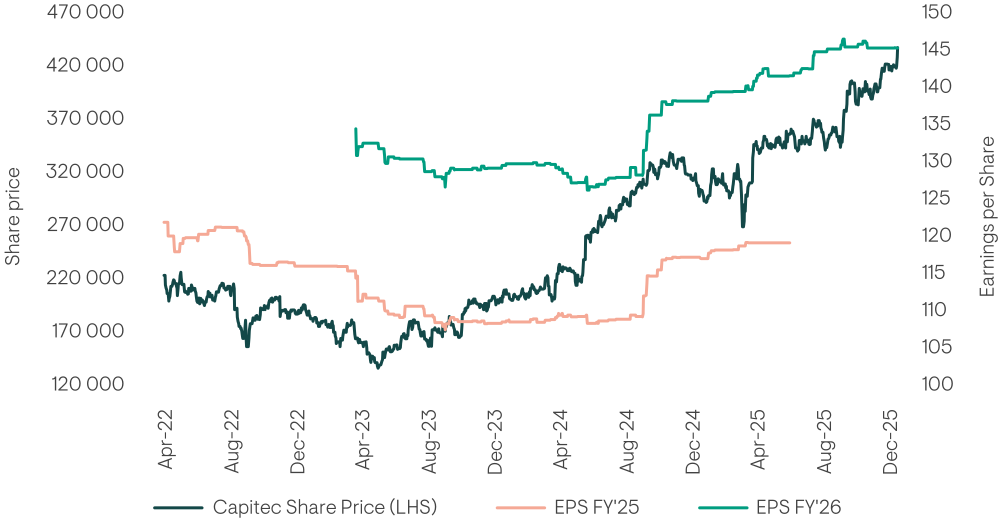
Equity exposure was therefore selective. Financials, including banks and insurers such as Capitec, Sanlam and Discovery, remained an important area of conviction, benefitting from improving earnings trajectories and the prospect of lower interest rates over time.
Figure 2: Capitec earnings revision
Source: Ninety One.
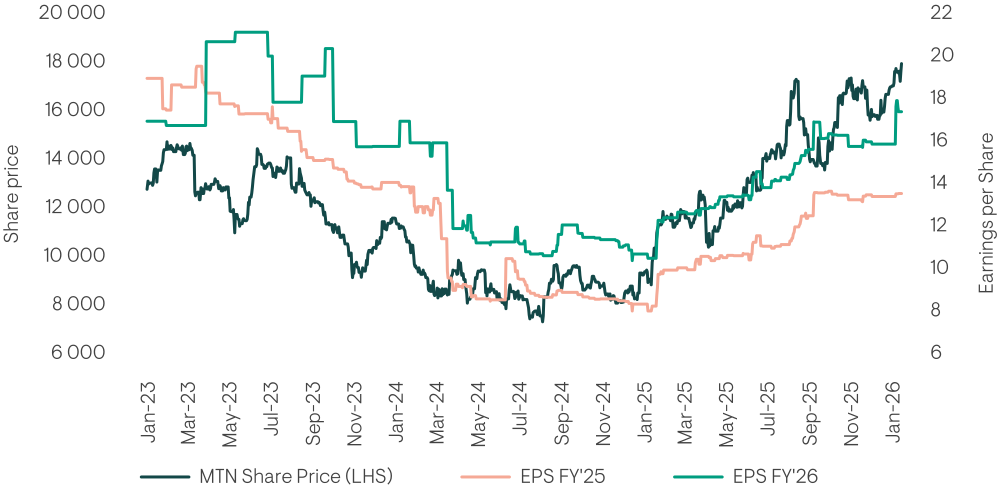
Positions such as MTN were traded more actively as valuations and company-specific developments evolved. By contrast, exposure to apparel retailers was reduced during the year after trading updates pointed to weaker-than-expected revenue, with capital redeployed toward sectors where relative earnings expectations appeared more resilient.
Figure 3: MTN earnings revision
Source: Ninety One.
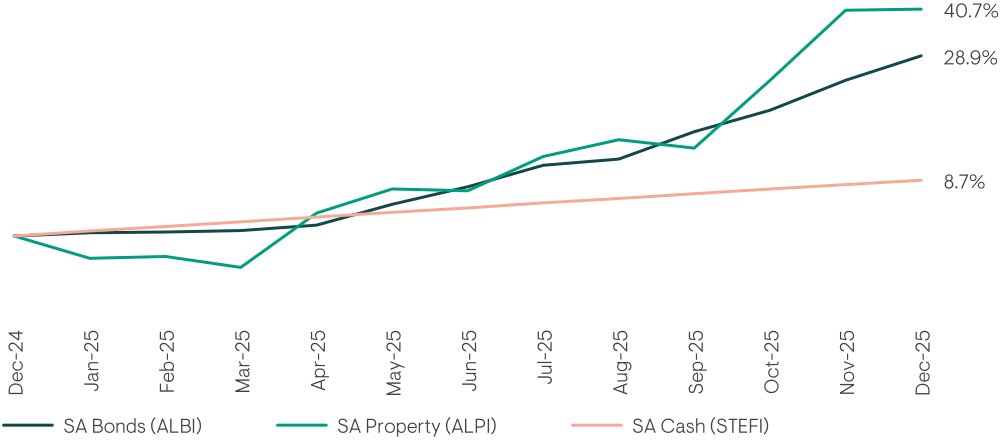
South African property, which had lagged for an extended period, began contributing more meaningfully later in the year as sustained lower bond yields improved the sector’s outlook. Government bonds also remained attractive as real yields continued to rank favourably on a risk-adjusted basis. Sentiment towards the asset class improved further as discussions to lower the inflation target gained momentum and South Africa’s exit from the FATF grey list removed an important overhang for international investors. The portfolio maintained sizeable exposure throughout the year as confidence in the domestic monetary policy environment improved.
Figure 4: Preference for Bonds and Property over cash benefitted performance
Source: Ninety One.
Active portfolio positioning
Performance over the period also reflected a series of portfolio decisions as market conditions evolved.
At a global level, exposure was expanded beyond the US to include opportunities in Europe and the UK as signs emerged that global growth leadership might begin to broaden beyond the narrow group of US technology companies that had driven much of the rally in previous years. European financials and defence companies began to benefit from rising fiscal spending and a more supportive growth outlook as European governments increased fiscal spending and broader support for industry. A small position in German defense contractor, Rheinmetall, for instance, was initiated in late 2023 and saw spectacular growth from late 2024 to 2025 as this theme gathered prominence.
Currency dynamics also played a role. The rand began strengthening after the formation of the Government of National Unity in mid-2024, as political uncertainty eased and investor sentiment toward South African assets improved. This supported domestic assets but muted the rand value of offshore returns. Offshore exposure therefore remained meaningful, though somewhat lower than in the previous year.
Periods of volatility also created opportunities to add to positions where valuations had reset, but fundamentals remained intact. One example occurred during the market sell-off following the US’s ‘Liberation Day’ tariff announcements in April 2025, when the portfolio redeployed capital into select holdings at more attractive levels.
Macroeconomic backdrop: resilience despite uncertainty
Markets repeatedly priced in more pessimistic economic outcomes than ultimately materialised. Despite trade tensions, geopolitical risks and evolving policy expectations, global growth proved more resilient than many had anticipated. The US consumer and labour market remained strong, while moderating inflation kept the door open for interest rate cuts.
This combination helped support risk assets, even as bouts of volatility unsettled markets.
Looking ahead
The macro backdrop remains broadly constructive. Growth has proven more resilient than expected and capital investment, particularly in areas such as AI infrastructure and energy transition, continues to support activity across several sectors. At the same time, markets are grappling with the potential for AI-driven disruption across industries, where the eventual winners and losers are likely to emerge both within and outside traditional technology sectors.
However, several sources of uncertainty remain. Geopolitical developments, including the recent conflict in the Middle East, have already affected energy markets and could materially influence inflation and growth expectations if supply disruptions persist.
In this environment, broad market momentum is unlikely to be the sole driver of returns. Instead, outcomes will depend increasingly on careful positioning across sectors, regions and asset classes. The portfolio remains well positioned to respond to new opportunities as they arise.
1 Market conditions may change and future returns may differ from those experienced over the past year.
2 Past performance does not predict future returns; losses may be made.
No representation is being made that any investment will or is likely to achieve profits or losses similar to those achieved in the past, or that significant losses will be avoided. This is not a buy, sell or hold recommendation for any particular security. For further information on Specific Portfolio Names, please see the Important information section.
