South African equities have performed well over the past two years, largely driven by a market re-rating as sentiment towards the domestic economy improved. The challenge going forward, however, is for domestic companies to convert this new-found optimism into sustainable earnings growth, which we believe will be the primary driver of share price returns in 2025.
The resurgence of the South African consumer will play a pivotal role in this transition. Our analysis suggests that the environment will continue to be supportive for consumers and that spending will continue to rise. Should the thesis play out as expected, companies that are well-positioned to benefit from the improved backdrop include Mr Price, The Foschini Group (TFG) and Capitec Bank, all of which occupy high-conviction overweight positions in our 4Factor multi-asset and equity portfolios.
Earnings growth drives share prices
Over time, we believe that share prices are primarily driven by a combination of earnings growth and dividend yield, both of which ultimately determine the long-term return of an investment in the South African equity market. Although market valuations can fluctuate due to changes in investor sentiment and macroeconomic conditions, it’s important to note that stocks typically cannot sustain high valuations without the corresponding earnings growth.
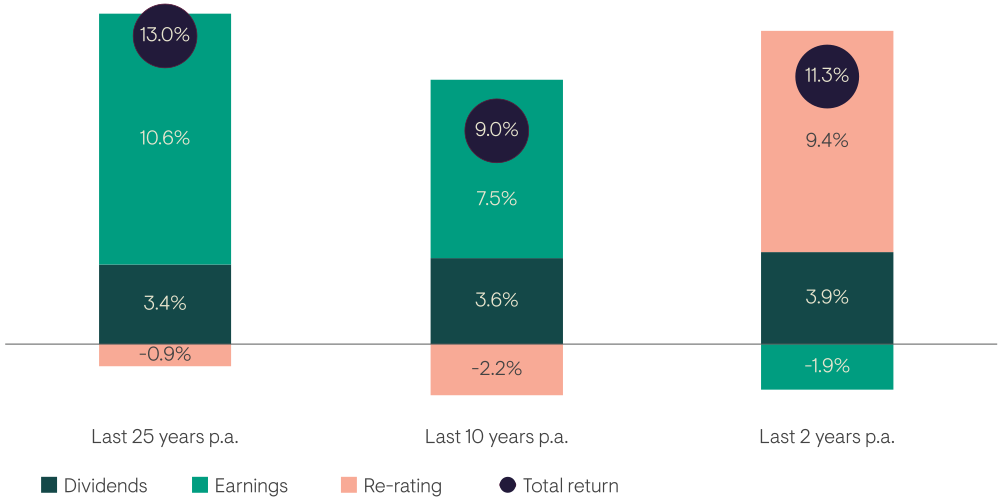
Historically, South African equities have gone through valuation cycles, where stocks became cheap due to pessimism and later re-rated as sentiment improved. Evidence of this can be seen over the past two years, where after a relatively muted 2023, sentiment towards the domestic economy improved sharply in 2024. This was primarily driven by optimism following the formation of the Government of National Unity (GNU) and the easing of economic headwinds, all of which led to an improved domestic outlook and, consequently, a re-rating in stock valuations. When looking at the constituent elements of growth over this period (Figure 1), there’s a stark contrast between the main drivers of equity returns over the past two years (which was primarily driven by a re-rating) compared to previous 10 and 25-year periods (which were primarily driven by earnings growth).
Figure 1: Breakdown of ALSI returns over time
Source: Bloomberg, as at December 2024.
Consumer resurgence as a growth catalyst for retail and banking stocks
South African equities continue to trade at attractive multiples, despite having re-rated from exceptionally undervalued levels. Domestic banks and discretionary retailers, for example, are currently trading at more than 10% below their 15-year average multiples, as measured on a 12-month forward price earnings (PE) basis.
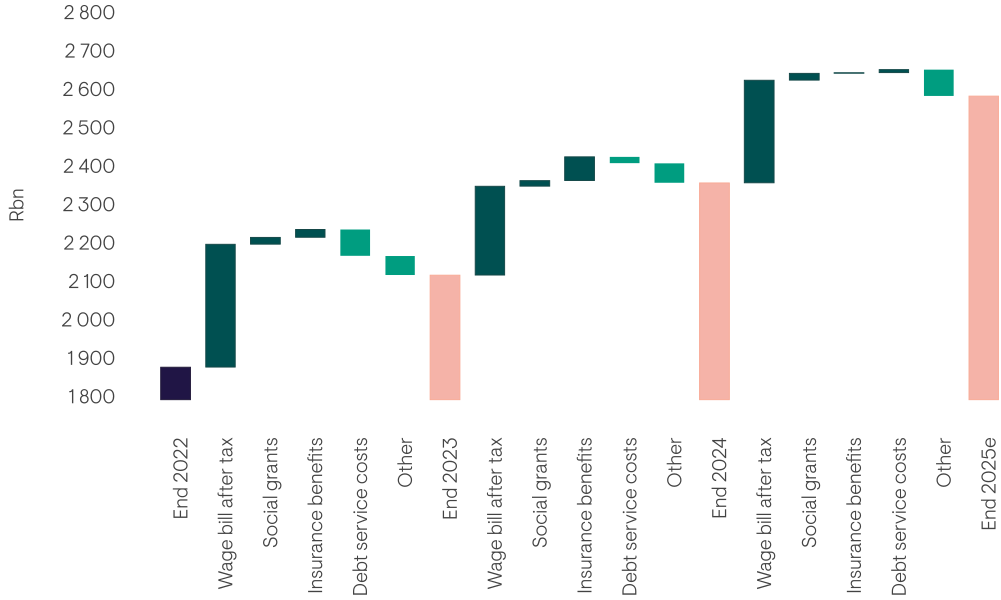
As we move into 2025, we expect to see a return to fundamentals, where share price performance will be more closely tied to earnings growth. A more supportive consumer environment will be among the key drivers of this transition. As shown in Figure 2, structural improvements in consumer disposable income are expected to unfold in 2025, fuelled by a combination of better employment growth prospects, above-inflation wage growth, lower interest rates, and an increase in government social grants.
Figure 2: Cash available for retail and discretionary spend
Source: Primaresearch, as at January 2025.
Lower interest rates
Despite a disciplined and conservative approach to monetary policy, the South African Reserve Bank (SARB) has already reduced local interest rates three times since September last year. This follows an aggressive hiking cycle between 2021 and 2023, which saw the prime lending rate rise from 7% to 11.75%. Our expectation is for further rate cuts – a minimum of 25 basis points (bps) – to come through in the coming months, which in turn will make borrowing costs even cheaper for both individuals and businesses.
Lower debt servicing costs should free up household income, allowing consumers to spend more on retail, home improvement, travel, and discretionary items. Mortgage and vehicle financing will become more affordable, which should stimulate demand for big-ticket purchases, indirectly boosting credit growth for banks and consumer spending for retailers.
Wage growth outpacing inflation
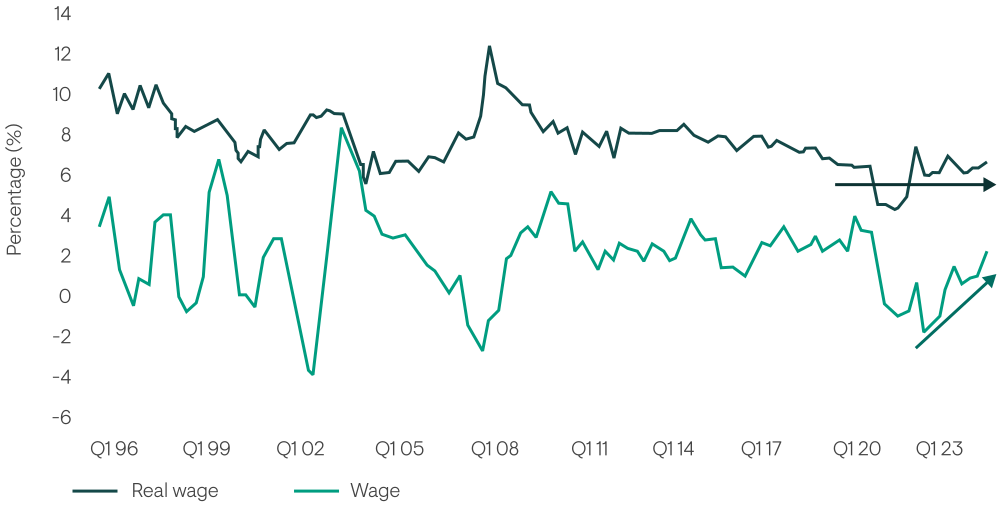
For the first time in several years, wage growth is expected to outpace inflation, meaning real income growth for South African workers. Inflation, which reached 7.8% in 2022, has moderated significantly to around 3% in late 2024 and is expected to stabilise between 4% and 5% in 2025.
Figure 3: Relief from lower inflation - nomical wage settlements quite steady
Sources: Andrew Levy Employment Publications, Stats SA, Standard Bank Research, as at February 2025. Please note this chart has been redrawn by Ninety One.
Wage growth trends for 2025 reflect a dynamic labour market shaped by both private and public sector adjustments. Private sector salaries have been rising as companies strive to retain skilled workers in an increasingly competitive job market. Corporate bonuses and performance incentives, which had been subdued due to economic uncertainty, are also expected to recover in 2025. Simultaneously, the public sector wage bill has expanded, with government employees receiving above-inflation pay hikes, injecting billions of rands into the economy. Minimum wage increases are also set to provide much-needed support to lower-income earners, who typically allocate a higher proportion of their income to consumer goods, benefiting retailers such as Mr Price and TFG.
Income grants and social relief measures
South Africa has one of the most extensive social grant systems in the world, supporting over 19 million1 people through various programmes, including old-age pensions, child support grants, and disability benefits.
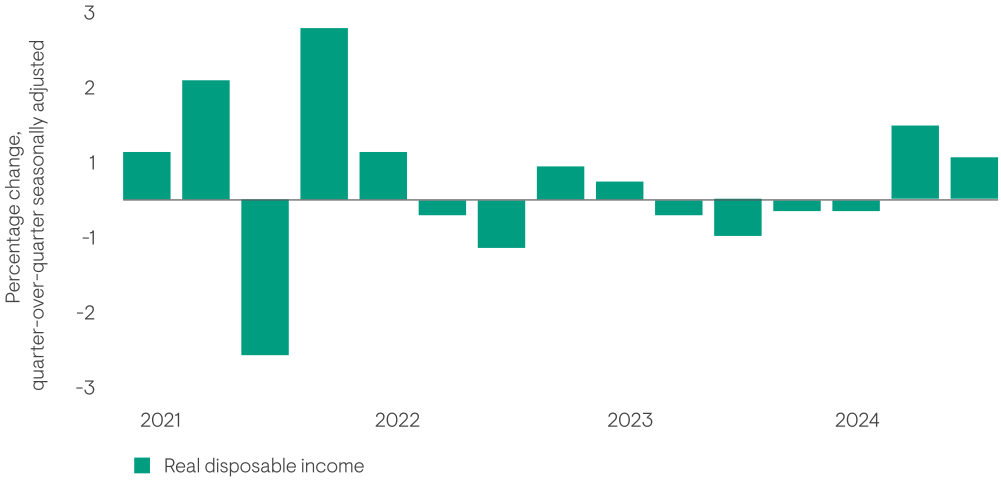
In 2025, key government support measures aim to further ease financial pressures on households. The Social Relief of Distress (SRD) grant was increased from R350 per month as of April 2024 to R370 per month, offering additional aid to millions of low-income consumers. Middle-income earners will also benefit from increased personal tax rebates and relief measures, putting more money back into household budgets. Additionally, the extension of energy-related tax incentives will help households lower electricity costs, freeing up disposable income for other expenses. The combination of higher government spending and tax relief is set to boost disposable income for millions of South Africans, particularly those in lower-income brackets, who tend to allocate a significant portion of their earnings to retail purchases.
Figure 4: Real household disposable income has improved
Source: SARB, Absa Research, as at December 2024. Please note this chart has been redrawn by Ninety One.
Employment data trending higher
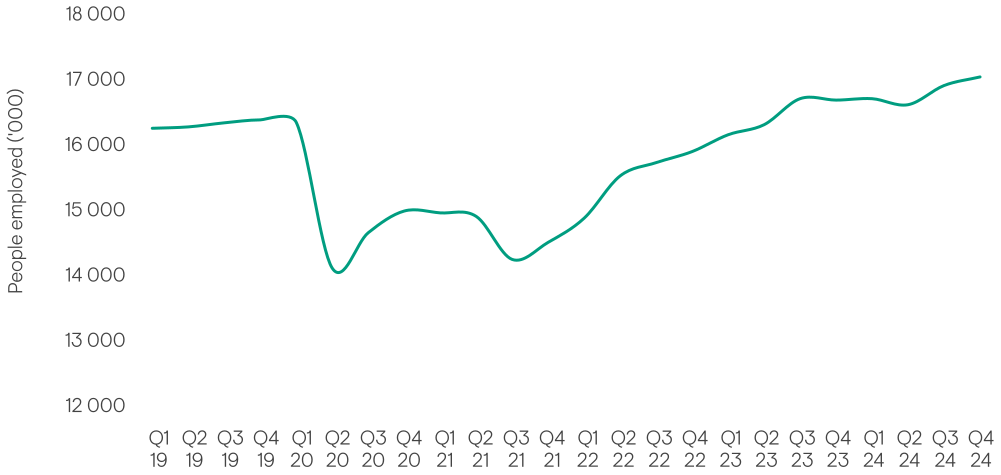
As shown in Figure 5, the COVID-19 pandemic had an extremely negative impact on the labour market, with approximately 2.2 million jobs lost in Q2 2020 (the first quarter following the start of the pandemic). The journey to return to pre-COVID levels has not come in a straight line, with a mild deceleration at the back of 2021. Since then, however, employment has grown from 14.5 million to the latest reading of 17.1 million, placing it ahead of its pre-COVID base. This is a positive indicator for consumers, as employment growth is the most important driver of the consumer wallet. We believe that an improving economy with better growth will continue to drive employment gains.
Figure 5: QLFS employed
Source: Quarterly Labour Force Survey (QLFS), Stats SA, as at February 2025.
Increases in consumer credit availability
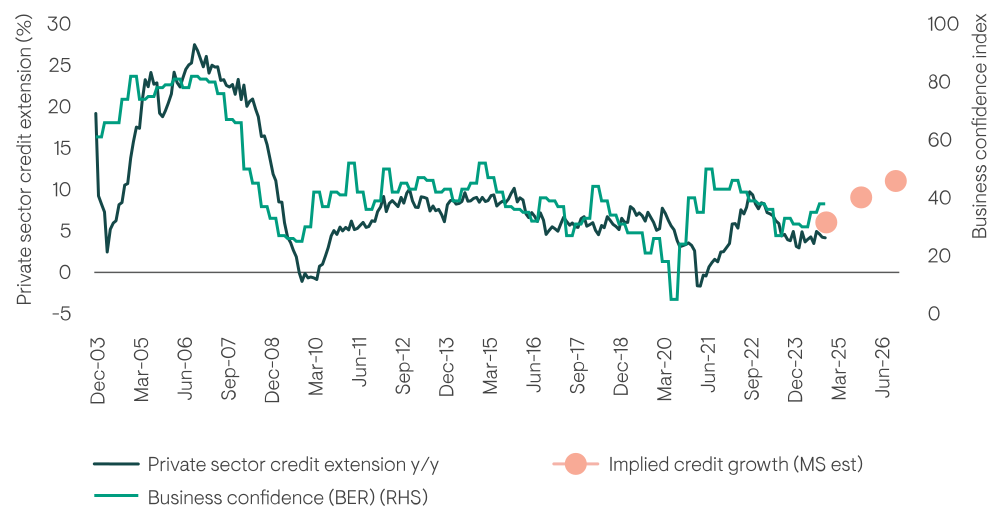
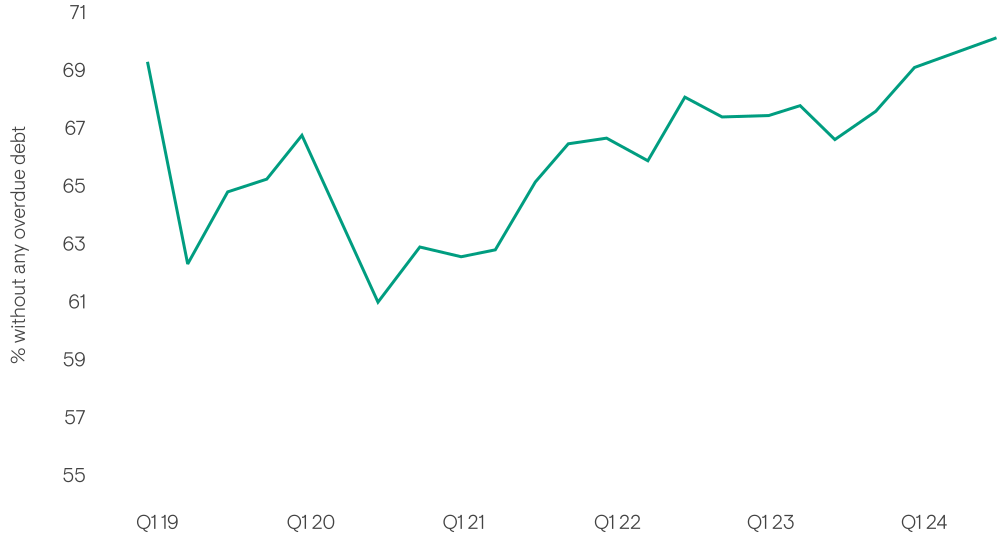
After tightening lending conditions in 2023, South African banks are now easing credit criteria as economic stability and wage growth reduce default risks. This shift has fueled a surge in consumer borrowing, with credit applications reaching an all-time high in the fourth quarter of 2024, signalling renewed demand for loans and financing options. Personal loan approvals have increased as banks grow more confident in lending to employed consumers with stable income streams. At the same time, higher spending limits on retail credit cards are supporting discretionary purchases at major retailers such as Mr Price and TFG. Additionally, home and vehicle financing has become more accessible, driving large-ticket purchases and further stimulating economic activity.
Figure 6: Credit growth expected to accelerate as confidence improves
Source: Bloomberg, Morgan Stanley Research, as at December 2024.
Note: Bureau of Economic Research (BER), Right-hand side (RHS), Morgan Stanley Research estimates (MS est).
Figure 7: More borrowers without overdue debt
Source: NCR, XDS, Eighty20, Standard Bank Research, as at February 2025. Please note this chart has been redrawn by Ninety One.
The impact on our high-conviction positions
As South Africa’s consumer environment improves, our high-conviction holdings, Mr Price, TFG and Capitec Bank, are well positioned to capitalise on the resurgence in spending and credit demand.
Mr Price stands to be one of the biggest beneficiaries of the consumer resurgence due to its value-driven apparel and homeware offerings. As disposable income rises, middle- and lower-income consumers, who form a significant portion of the retailer’s customer base, will have greater spending power, driving demand for affordable fashion, footwear, and household goods. The company’s cash-based sales model allows it to immediately benefit from higher consumer liquidity. Additionally, the firm’s ongoing market share gains, store expansion strategy, and robust e-commerce growth—evidenced by a 21.9% increase in online sales in December 2024 — further position it to capture incremental consumer spending as economic conditions improve.
TFG is also poised to benefit from improving consumer trends, leveraging its extensive multi-brand portfolio and strong online retail presence. The company’s digital transformation, spearheaded by its Bash platform, has led to a remarkable 47.9% surge in online sales. Meanwhile, TFG’s expanding physical store network, with 4,720 locations globally, enhances its ability to capitalise on rising retail demand. Additionally, the company’s credit business stands to gain from increasing credit approvals and lower interest rates, enabling more customers to finance their purchases. TFG Africa’s focus on inventory efficiency and pricing strategies resulted in a gross margin expansion of 270bps in the first half of FY2025, which was key in increasing profits by 7.3% for the division. We expect continued gross margin expansion as the firm’s strategy continues to yield positive results.
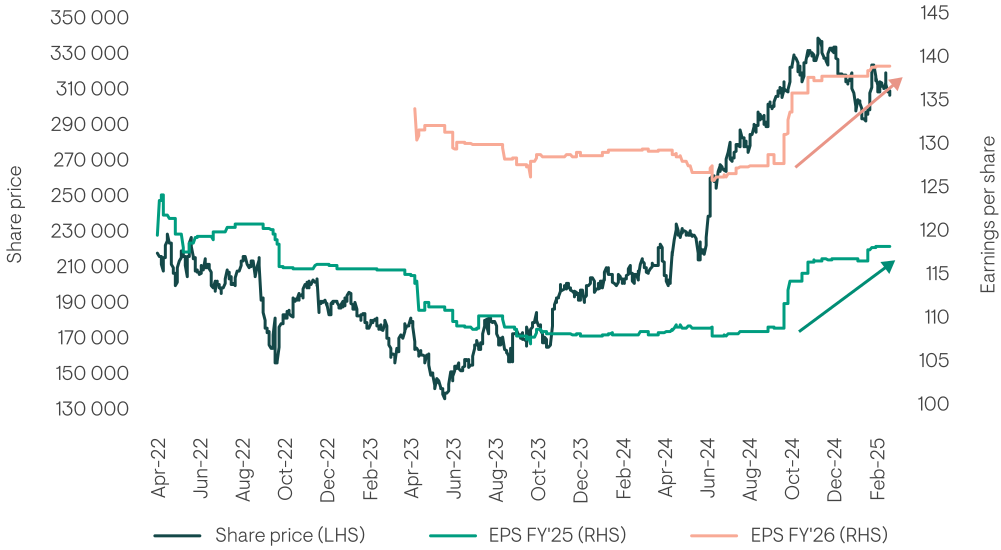
Capitec Bank is particularly well-positioned to leverage increased credit availability and consumer confidence. Expected interest rate cuts in 2025 will improve loan affordability, driving higher demand for personal loans, credit cards, and retail financing products. Capitec Bank’s aggressive customer acquisition strategy, particularly among emerging middle-income earners, supports growth in both its transactional banking and credit segments. As economic conditions improve, loan impairments and defaults are expected to decline, further boosting the bank’s profitability. Additionally, Capitec Bank’s expansion in digital banking and value-added services will enhance its non-interest income, positioning the bank for sustained earnings growth throughout 2025 and beyond.
Figure 8: Improving earnings expectations profile of Capitec Bank
Source: Ninety One, Bloomberg, as at February 2025.
Conclusion
After a sentiment-driven market re-rating in 2024, we believe the next phase of stock price appreciation will be earnings-driven, favouring companies that can convert improving economic conditions into real revenue and profit expansion. Our high conviction positions across the retailers and banks (Mr Price, TFG and Capitec Bank) each possess strong fundamentals and are well-positioned to outperform as consumer disposable income increases, interest rates fall, and employment continues to grow.
For investors seeking exposure to earnings-driven market growth in 2025, our exposure to consumer-oriented stocks offers compelling value with clear growth catalysts and an improving earnings profile. We believe our 4Factor multi-asset and equity portfolios are well-positioned to capture the growth on offer from a resurgent South African consumer – more specifically – as the investment landscape transitions through the cycle and back to fundamentals.
1 Excluding the COVID-19 social relief of distress grant.
