Hidden GEMs: The bull case for emerging markets just got stronger
Improving corporate earnings, resilient economies and a changing global investment landscape are creating a compelling backdrop for emerging market assets.
Fourteen days, six states, farm visits and meetings with around 20 companies across the US agricultural value chain. After travelling through the Corn Belt, one conclusion stands out: agriculture stocks may be at the beginning of a multi-year bull market.
For much of the past decade, the world has enjoyed plentiful grain supplies, supported by favourable growing conditions across the major production regions. That backdrop is beginning to change. Global inventories have plateaued, while supply risks are increasing and new sources of demand continue to emerge.
Weather is another potential pressure point. A prolonged El Niño could disrupt agricultural production in key growing regions, with the duration of the event potentially more important than its intensity.
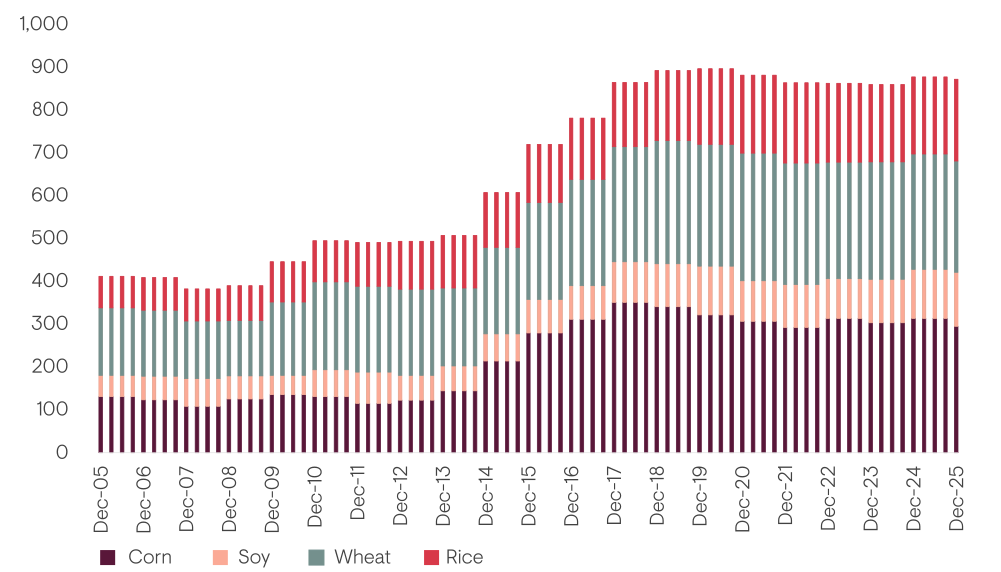
Source: US Department of Agriculture, September 2026.
Grain prices have begun responding. Corn new-crop futures rose 23% during July and August, with soybeans rising by 13%. But prices have yet to rise far enough to stimulate the additional acreage and production ultimately needed to rebalance the market. And the message from farmers suggests the pressure is far from over.
Across the Corn Belt, cost inflation came up repeatedly in conversation. Diesel and fertiliser are particular concerns, while farmers are also watching US trade policy closely. China's return as a significant buyer of US soybeans is also being watched, particularly for what it could signal for agricultural trade more broadly.
Dawid Heyl, Natural Resources Portfolio Manager: "The squeeze on farmers is not over. Diesel and fertiliser costs remain high, and balance sheets still need time to recover."
Years of relatively weak grain prices have left many farm balance sheets under pressure. Higher crop prices can help repair them. But that process takes time, with implications for which parts of the agricultural value chain are likely to benefit first and which will be overlooked.
The closure of the Strait of Hormuz has added another pressure point for farmers: fertiliser prices. The Gulf is a major source of nitrogen fertiliser and related inputs, and disruption to shipments has tightened global supply. Northern Hemisphere farmers entered the conflict relatively well stocked, cushioning much of the impact on the current crop. However, the greater risk lies ahead: higher fertiliser costs or reduced application could weigh on yields in subsequent planting cycles, particularly if those pressures coincide with less favourable growing conditions.
One of the strongest messages from the trip was ethanol, and the prospect of a structural increase in US corn demand.
Heyl: "Ethanol is already a major source of US corn demand, with most gasoline sold in the US today containing up to 10% ethanol. Moving towards a 15% blend represents very significant growth in the ethanol component. While it won't happen overnight, that is a meaningful new source of demand for US corn."
Higher fuel prices are already supporting biofuel economics, while increased ethanol demand could keep plants operating at high utilisation rates.
While there are tailwinds for parts of agriculture, investors need to position carefully within the sector.
Heyl: "Nitrogen fertiliser is the standout opportunity for us. Supply remains tight and prices could stay higher for longer than the market expects. Equipment is a different story: farmers still need time to repair their balance sheets before purchasing expensive equipment."
At the same time, inventories of used equipment – particularly larger tractors – remain elevated. New machinery therefore has to compete against substantial existing stock before manufacturers can regain stronger pricing power. The market, meanwhile, appears to be anticipating a more substantial recovery. That disconnect matters.
Seeds are another area where the outlook appears more attractive. Corteva is preparing to separate its seed and crop-protection businesses. The higher valuation that could be attached to a focused seed company has the potential to more than offset any de-rating of the remaining crop-protection business.
Heyl: "Among agricultural inputs, we currently see greater opportunity in seeds than in crop protection. The Corteva separation could help expose that value more clearly, with the focused seed business potentially attracting a higher valuation."
Biofuels provide another route into the theme.
Darling Ingredients' renewable-diesel exposure is particularly interesting. The opportunity is broadening beyond California's Low Carbon Fuel Standard as federal renewable-fuel obligations support demand across the US. With margins remaining resilient, the market may be underestimating the potential earnings contribution.
Taken together, the trip reinforced the need for a selective approach: nitrogen fertiliser first, biofuels close behind, and seeds preferred to crop protection – while agricultural equipment may have to wait.
The message from two weeks on the road across the Corn Belt is simple. Heyl: "After years of surplus grain markets, we think the cycle is beginning to turn. This could be the start of a multi-year bull market."