Chapters
EM ex-China - a standalone allocation rationale

China is the world’s second-largest equity market by market capitalisation. Asset allocators adopt different approaches to gaining or avoiding exposure to China. They range from including China as part of an emerging market equity mandate to treating it as a separate allocation, using China as a completion strategy, or excluding it entirely.
These varied approaches have spurred demand for EM ex-China strategies. According to eVestment, AUM in EM ex-China strategies and exchange-traded funds (ETFs) has grown from US$6.3 billion at the beginning of 2022 to over US$40 billion by end June 2025. The universe has grown at an annualised rate of 74%1 over the last six years, albeit from a low base.
An EM ex-China mandate allows investors to decide on their China exposure separately from the rest of their investments in emerging markets. This can be useful for those who are cautious about China’s outlook, concerned about concentration risk, or want the flexibility to manage their China exposure independently. In other words, an EM ex-China allocation can serve as a complementary building block within a broader allocation. China’s share of the MSCI Emerging Markets Index has been volatile – peaking at around 40% in 2020, dropping to a record low 23.7% at the end of 2024, and currently accounts for just under 30%2. Against this backdrop, the case for examining EM ex-China as a standalone opportunity set remains highly relevant.
Figure 1: EM ex-China universe flows since 2019
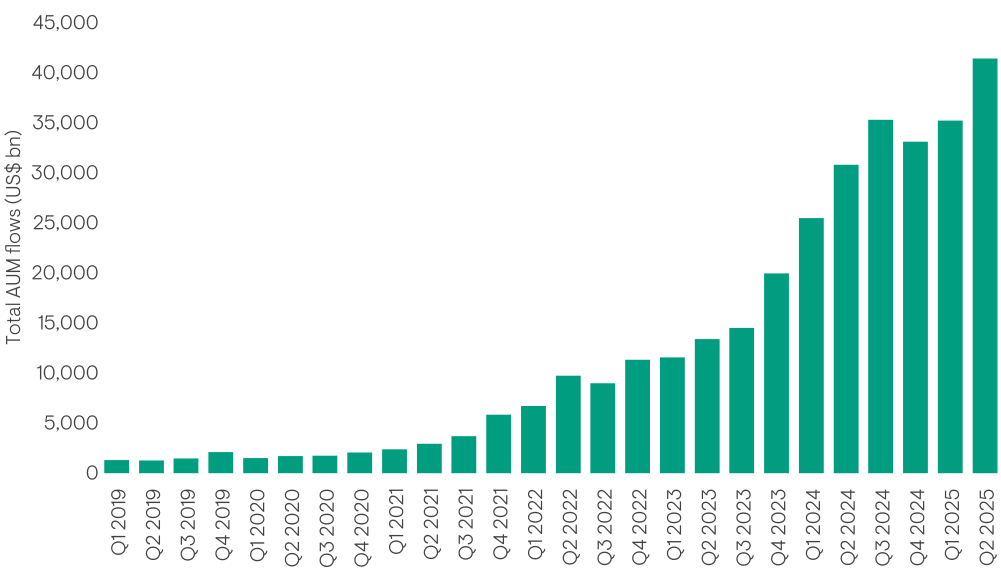
Source: eVestment as at 30 June 2025.
1. Source: eVestment, as at Q2 2025.
2. MSCI Emerging Market Index, as at 30 June 2025.
For further information on indices, please see the Important information section.
