In a 2020s crisis of global integration, allocators face a more demanding investment environment.
Geopolitical fragmentation challenges the idea of optimising around a single benign macro baseline. Portfolios need to be built for resilience in a world that is more turbulent, more politicised and more prone to tail risks.
1Inflation protection needs to be deliberate
Resource bottlenecks and sharper international competition are likely to make inflation more episodic and less predictable. That is exactly the pattern that wrong-foots portfolios built for the disinflation era. When inflation shocks dominate, stock-bond correlations can turn positive and both sides of a traditional portfolio can struggle.
That means inflation resilience needs to be explicit, not assumed. Natural resources, infrastructure-type assets, inflation-linked bonds and quality equities with genuine pricing power can all help. But timing still matters. Equities can underperform when valuation compression bites, as 2022 showed, while inflation-linked bonds can suffer when duration effects overwhelm inflation compensation.
2 Sovereign duration should be treated tactically
If supply-side shocks remain a recurring feature of the regime, government bonds can no longer be relied on to provide automatic ballast. That role depended on low, stable inflation and central banks being able to cut aggressively when growth disappointed. In a world shaped by public dissatisfaction, energy constraints and great-power competition, higher term premia and more volatile duration look more plausible.
Figure 7: The stock-bond correlation changes over time
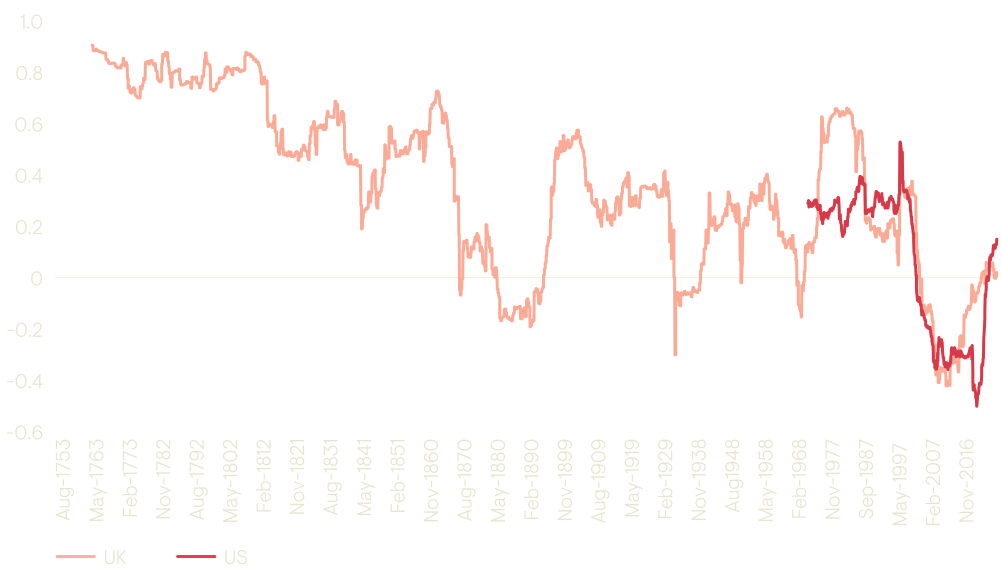
Source: Ninety One, FRED, Bloomberg as at January 2026
Even if near-term inflation surprises on the downside, the deeper issue is regime instability. Growth and inflation shocks are likely to alternate, making correlations less dependable than they were between the late 1990s and 2021. Long duration should be added when valuations are attractive, rather than held by default at benchmark weight. Where governance allows, spreading rate exposure across markets can also reduce reliance on a single fiscal-monetary regime.
3 Global diversification matters more in a multipolar world
US assets became the default answer to multiple questions: growth, quality, liquidity, innovation and geopolitics. The result is that many institutional portfolios are unusually concentrated. Paradoxically, investors should want to be more global in a world that is deglobalising. In a multipolar system, domestic politics, policy choices and supply chains pull returns apart, increasing the value of genuine global diversification.
Figure 8: The shifting correlation between US and Chinese equity markets
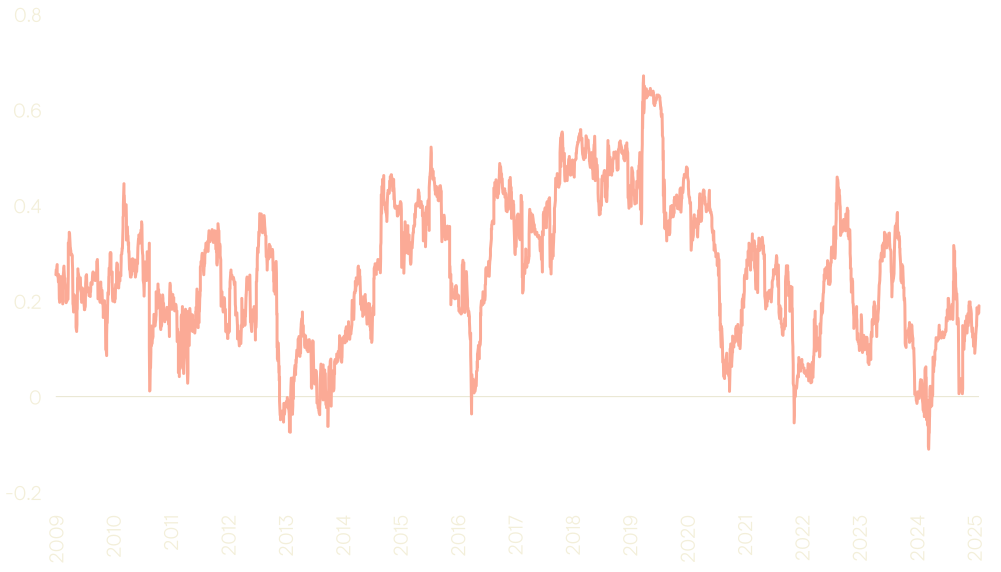
Source: MSCI, Bloomberg; Ninety One calculations (90-day rolling correlation of MSCI USA and MSCI China indices).
4 Thematic exposure should focus on structural tailwinds
Thematic investing does not have to mean high-growth technology. In the 2020s, the clearest tailwind is the global capex cycle in grids, power, defence, reshoring, data centres, AI infrastructure and critical materials. These profit pools look very different from the asset-light globalisation model of the 2010s and are often under-represented in benchmarks until late in the cycle. They need to be treated as multi-year allocations and sized with humility and valuation discipline.
Some tailwinds will also accrue at the country level rather than the sector level, benefitting economies such as Mexico, Vietnam and parts of ASEAN as production networks reconfigure.
5Liquidity is a strategic asset
In a world of recurrent political shocks, allocators should value liquidity more, not less. That does not mean abandoning private markets, but it does mean being honest about what illiquidity does and does not diversify. Many private allocations embed equity and credit risk with delayed price discovery. Holding enough liquid assets allows portfolios to act during dislocations rather than become forced sellers. In this regime, liquidity is not a cash drag but an embedded optionality.
The period of easy globalisation is over. Portfolio construction built on stable correlations, disinflationary tailwinds and a single macro centre of gravity is less robust than it once looked. Greater dispersion across countries, sectors and asset classes is likely to persist. Inflation shocks will be episodic rather than linear. Liquidity, optionality and diversification across regimes become more valuable. Our task is not to predict every shock. It is to build portfolios that can absorb them.
Related content

Road to 2030
Our Road to 2030 research aims to help investors maintain awareness of the transformative themes shaping our world.