Our research argues that another assumption behind easy globalisation is breaking down: the idea that energy and commodity supply will remain abundant, flexible and politically neutral.
For much of the period from the early 1980s to the early 2000s, that was broadly true. Oil and other commodities were generally cheap, spare capacity was ample and even major geopolitical shocks often failed to produce sustained price spikes. In that world, policymakers could treat energy as plumbing rather than strategy, while long supply chains remained economical and politically manageable.
That shift unfolded in stages. First came the China demand shock of the 2000s, when fixed-asset investment pulled forward global demand and exposed how little spare capacity remained. Then came the 2010s, when shale and softer post-GFC growth restored some supply elasticity and capped prices. In the 2020s, we have entered another regime, one in which supply constraints have become political. Energy, metals and critical materials function as strategic inputs rather than neutral commodities.
At the same time, demand is rising across several fronts. Electrification, grid expansion, defence spending, infrastructure renewal and AI data centres all require large volumes of energy and materials. And the green transition doesn’t reduce resource intensity in the near term; in many cases, it increases it. Electric vehicles use more copper than internal combustion vehicles, data centres raise electricity demand and rearmament adds further pressure through materials-intensive equipment.
Supply, in contrast, is slower and less elastic than many investors have become used to. Covid was not just a demand shock but a balance-sheet shock for producers. Since 2020, capital discipline, ESG constraints, shareholder pressure and long project lead times have limited reinvestment. New supply, especially in mining, can take years to bring onstream. The vulnerability doesn’t stop at extraction. Processing and refining chains are often narrower and more geographically concentrated than the old oil system, creating chokepoints that are easier to weaponise.
This is particularly visible in minerals needed for data-centre expansion.
Figure 5: Geographical concentration of the supply of selected refined critical minerals needed for data centre expansion, 2024
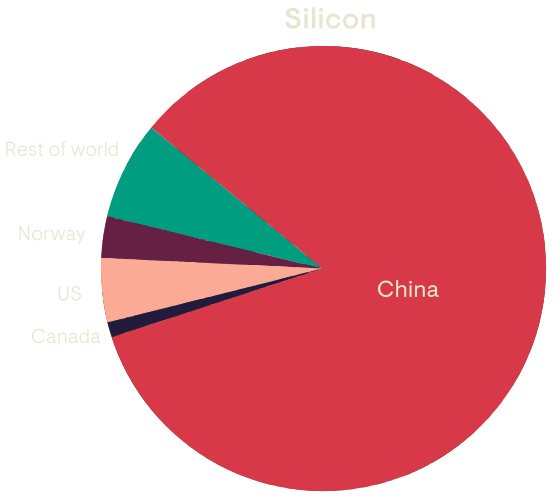
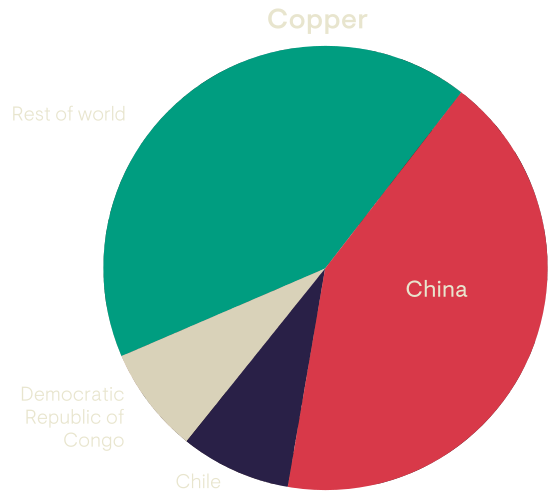
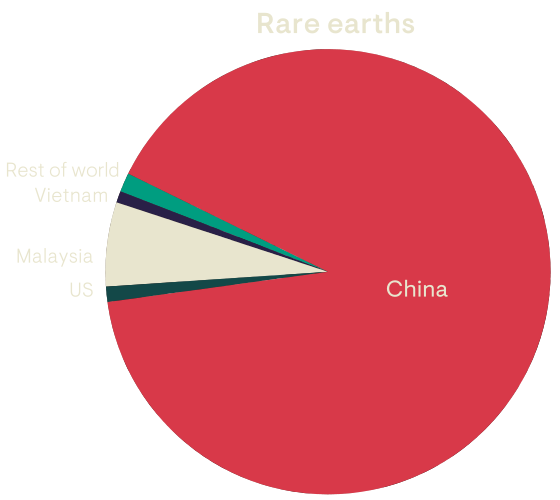
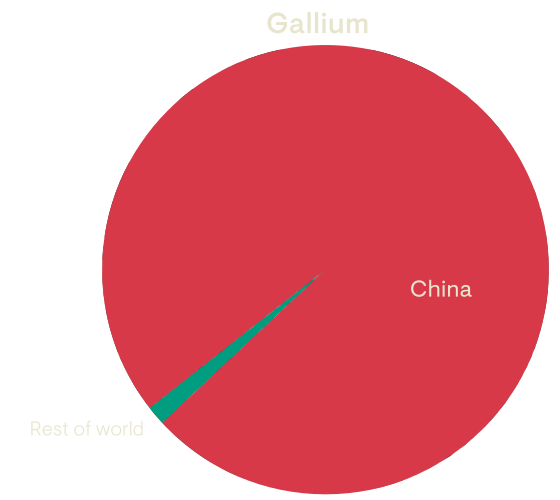
Source: IEA, 2025.
Technology rivalry is adding to these pressures. AI, advanced computing and data centres are not dematerialised industries but energy- and resource-intensive systems. Rather than loosening material limits, technological competition is increasing demand for reliable power, grid infrastructure and the inputs needed to build them. The green transition, meanwhile, is deepening many countries’ dependence on China, given its central role in critical mineral supply chains and processing.
Geopolitics is adding to the strain. Since the pandemic, governments have turned more openly to stockpiling, export controls, industrial policy and friend-shoring. Russia’s invasion of Ukraine exposed how quickly food and energy shocks can spill into political instability, while tighter markets have created feedback loops in which hoarding and de-risking worsen shortages. Access to key inputs is no longer a neutral market outcome. It is increasingly shaped by strategic rivalry, national security priorities and shifting political alignments.
For investors, natural resources are no longer just an inflation hedge or a late-cycle trade; they are increasingly a strategic exposure in a world of tighter supply and greater political intervention.
Next transformation:

The age of grievance
Public dissatisfaction is becoming a structural force in politics, policy and markets.