The chart
Attractive overall yields have masked a declining credit spread in the investment-grade credit market
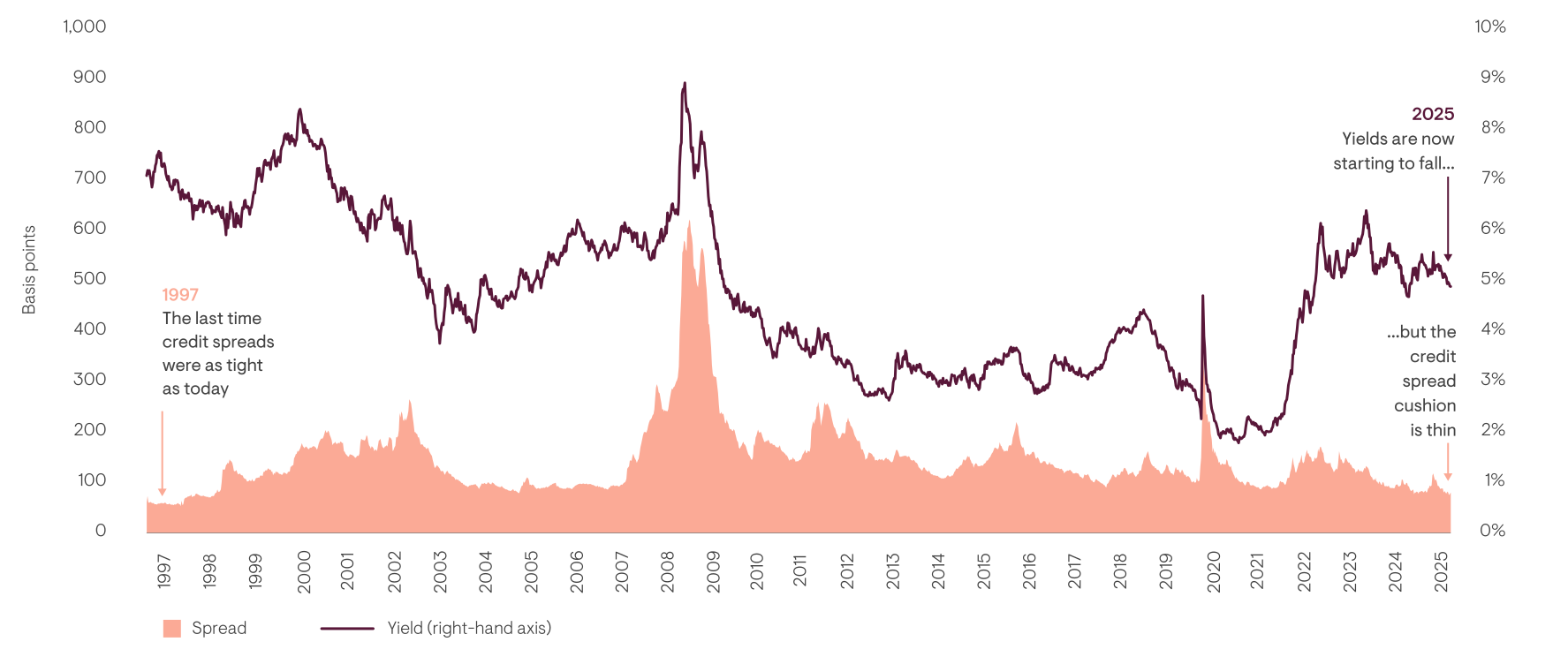
Source: ICE BofA, US Corporate Index. As at 31 August 2025. The spread measure used is the option-adjusted spread over government bonds. Yields used are yield to worst.
The context
Over recent years, the allure of attractive all-in yields (income) has seen investors flock to the investment-grade corporate credit market. At the same time, credit spreads have narrowed sharply. This matters because credit spreads provide additional income that has helped smooth the volatility generated by moves in government bond yields in recent years.
Today, however, credit spreads are unusually tight and are at levels not seen since the late 1990s. Historically, when credit spreads were at similar levels, all-in yields were on average more than 170 basis points higher than they are now. With yields having fallen back to levels last seen three years ago and the economic outlook still uncertain, demand for the asset class could wane, and investors may face greater volatility than they expect.
The conclusion
Credit investors who focus solely on the yields on offer in mainstream markets risk overlooking an important nuance. With the credit spread eroded, this traditionally “safe” asset class may underdeliver, especially if all-in yields prove to be too low to sustain continued strong demand. Investors looking for income should broaden their perspective and invest selectively across both traditional and specialist areas of credit in today’s uncertain environment.