Globalisation over the past three decades unfolded in unusually favourable conditions.
Following the Cold War, the United States occupied a dominant global position, energy and commodity supplies were abundant and political support for economic integration was broadly intact. In that environment, global trade, capital flows and supply chains expanded with relatively little friction.
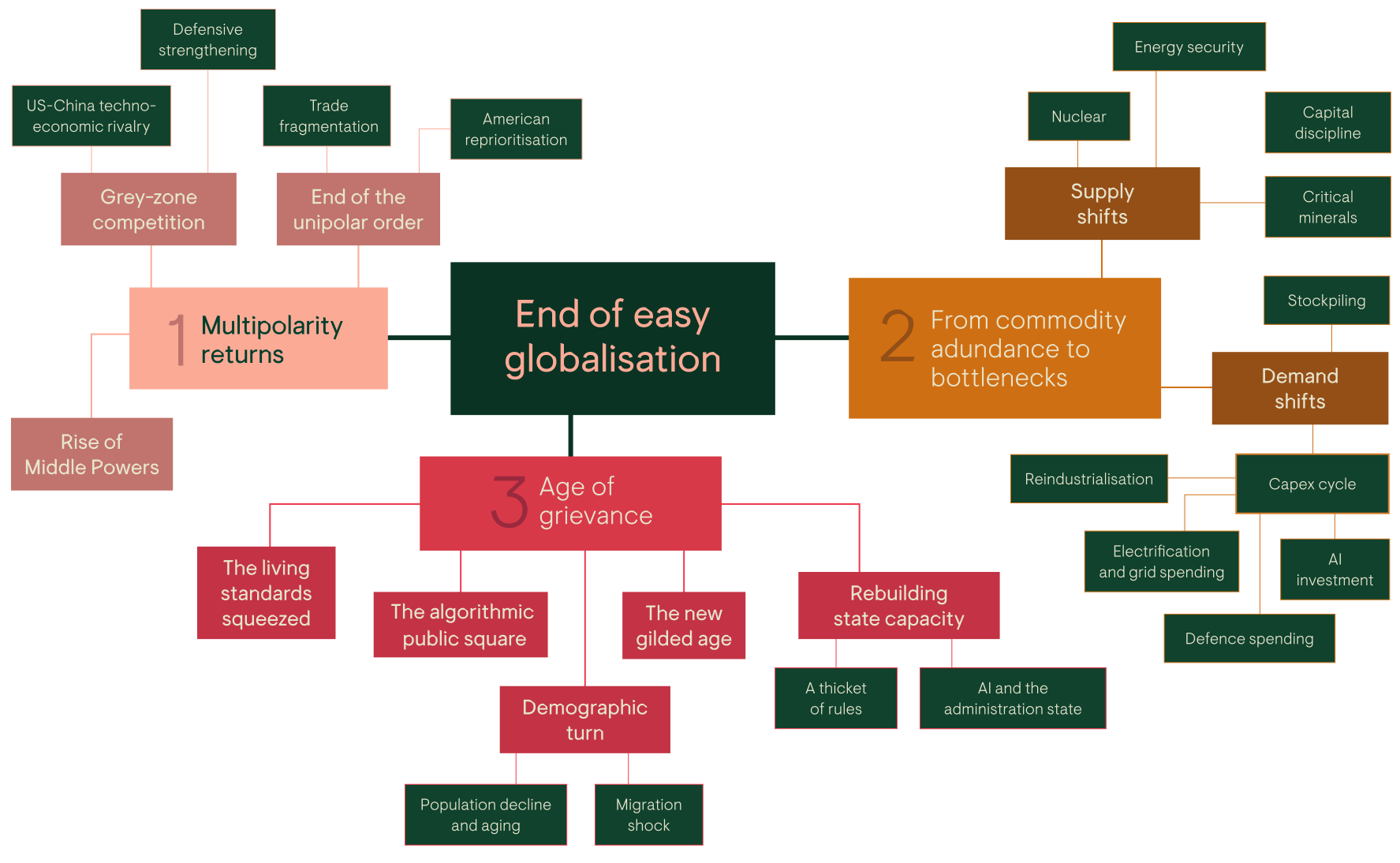
That backdrop is now changing. In this new research, The end of easy globalisation, we examine the structural forces behind this shift. The work builds on our Road to 2030 framework, in which we use mind maps to trace multi-year structural themes across the global economy. Here, we apply the same lens to geopolitics, focusing on three sub-themes: a multipolar global order, commodity bottlenecks, and what we call the age of grievance, reflecting the growing intolerance of the political and social costs of globalisation.
1The geopolitical system is becoming more multipolar.
The United States remains powerful, but other states have gained influence, and nuclear deterrence makes direct confrontation between major powers increasingly costly. Competition therefore plays out through technology, trade policy, sanctions and cyber activity rather than conventional conflict.
Explore: Multipolarity returns
2The economic foundations of globalisation are tightening.
Electrification, artificial intelligence, defence spending and infrastructure renewal are all resource-intensive sectors, while supply chains for many critical materials are geographically concentrated and politically sensitive. Commodities that once appeared as neutral inputs are again becoming strategic assets.
Explore: From commodity abundance to bottlenecks
3Domestic political pressures are rising across many economies.
Stagnant living standards, widening inequality and demographic change have fuelled public dissatisfaction, increasing scepticism toward global institutions and encouraging more interventionist and nationalist economic policies.
Taken together, these developments suggest the world is entering a more fragmented and politically complex phase. We started exploring this in our work setting out a fourth systemic crisis since the 20th century: a crisis of global integration. We have updated and incorporated that thinking here, given its growing relevance for allocators. For investors, these developments carry several important implications:
- Inflation may become more episodic and supply-driven, reflecting resource constraints and geopolitical competition.
- Traditional diversification may become less reliable, particularly the assumption that bonds consistently offset equity risk.
- Politics and industrial policy will play a larger role in shaping markets, influencing sectors, supply chains and national growth paths.
- Dispersion across countries and industries is likely to widen, creating both new risks and opportunities for allocators.